Process
Armatures for Poseable Faux-Fur Art Dolls: Materials, Joints and Limits
Choose an armature by the pose, weight and handling a faux-fur figure must withstand—not by material alone.

By Sophie Harrow
· 11 min read
Start with the pose requirement, not the material
A handmade animal figure that will not hold its pose needs more than a different wire. It needs an armature selected around its scale, weight, unsupported spans, covering and intended use. For a small, lightly padded figure intended mainly for display, a flexible wire armature is often the simplest answer. A longer or heavier form may need bundled wire or a reinforced core. If the figure must be repositioned repeatedly and predictably, a mechanically jointed structure is usually more appropriate than relying on one flexible wire to act as both skeleton and hinge.
The first distinction is between three kinds of poseability:
- Display posing: the maker or collector sets the figure in a position that may remain unchanged for a long time.
- Occasional adjustment: the figure can be carefully repositioned from time to time, but movement is not its main function.
- Repeated handling: joints are expected to move through cycles of articulation, perhaps during fitting, performance, photography or regular interaction.
A wire armature suitable for the first use may fatigue, kink or pull through its covering under the third. Poseability does not automatically mean load-bearing strength, long-term stability or safe handling.
Before choosing materials, draw the animal at full scale. Mark the centre of each joint, the longest unsupported span, the expected contact points and the approximate thickness of the finished fur-covered parts. Note whether the feet will stand independently, whether the tail will be supported by the body, and whether the figure needs a base. The available space beneath the faux fur matters as much as the strength of the skeleton: a robust armature that cannot be padded smoothly may create hard ridges, pressure points or visible changes in the silhouette.
Compare the main armature options
| Armature type | Useful strengths | Main limitations | Most suitable use |
|---|---|---|---|
| Single wire | Light, inexpensive and quick to shape | Limited load capacity; can fatigue at repeated bends | Small limbs, tails, ears and display poses |
| Bundled or wrapped wire | Greater stiffness and stress distribution | Bulkier; may need more padding to disappear | Longer limbs, necks and larger soft forms |
| Sculpted or rigid core | Stable mass and dependable support | Less freely poseable; transitions need planning | Torsos, heavy forms and hybrid structures |
| Mechanically jointed armature | Defined pivots and repeatable movement | Heavier, more complex and harder to conceal | Repeated handling and controlled articulation |
Single wire
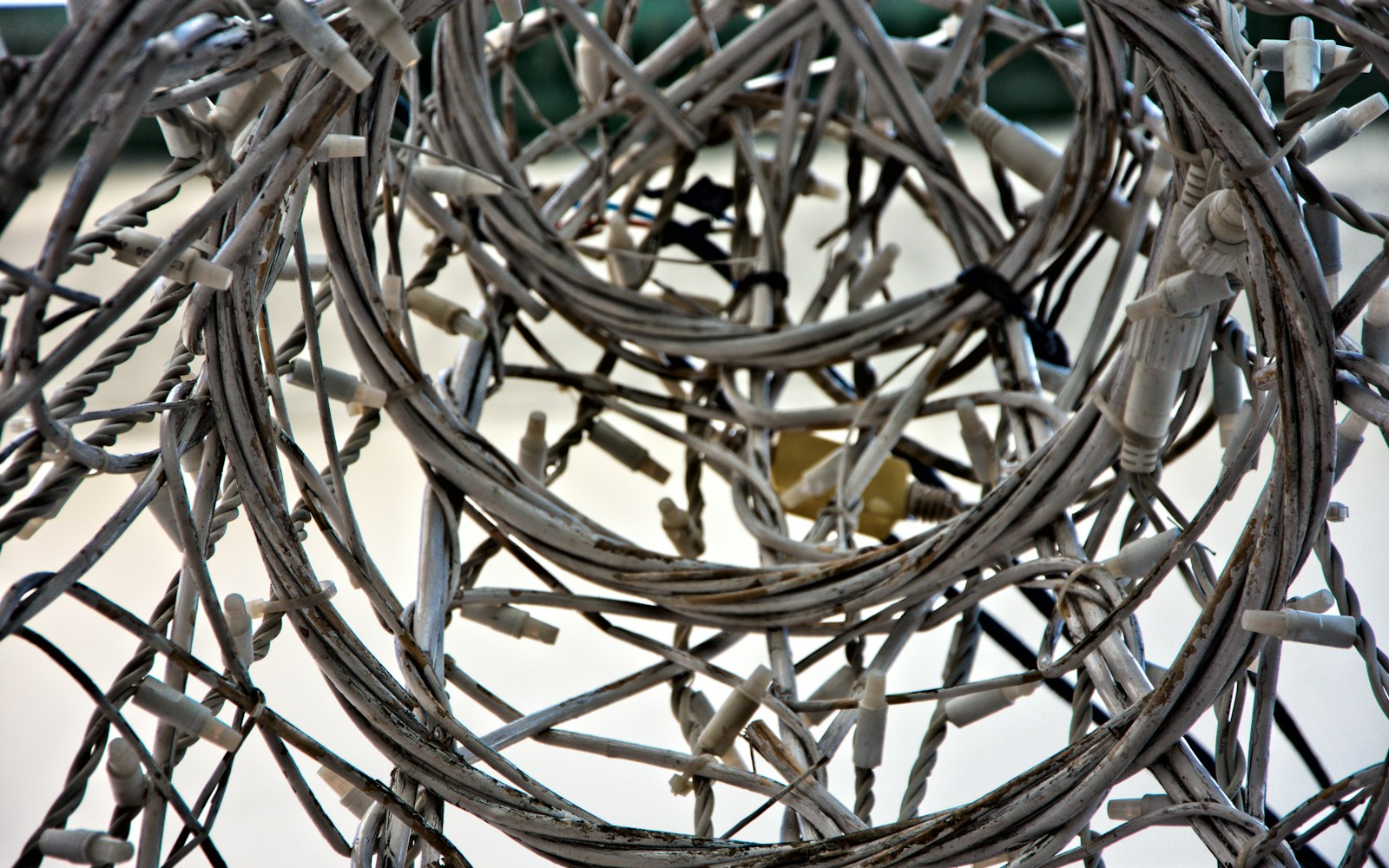
A single flexible wire is useful when the armature must remain narrow and light. It can pass through a small limb, tail or ear and allow gradual bending rather than a visible hinge. This makes it a practical starting point for a small poseable animal doll with modest padding and limited repositioning.
Its weakness is concentrated stress. A sharp bend, a narrow transition or a limb forced to support too much weight can become a fatigue point. The wire may also straighten under load, shift inside the padding or work through the fur backing. Single wire is therefore best treated as a structure for controlled display posing, not as a promise of repeated articulation.
Bundled or wrapped wire
Several wires bound together, or a wire reinforced with mechanical wraps and additional structure, can distribute stress across a longer span. This is helpful in necks, tails, limbs and larger faux-fur forms where one strand would sag. Reinforcement should be concentrated where testing identifies a problem rather than added indiscriminately throughout the figure.
The trade-off is bulk. A bundle can form a ridge beneath a short or sparse fur pile, reduce the space available for graduated padding and make a joint feel stiff. Its ends and transitions also need careful finishing. A smooth, compact change in diameter is easier to cover than an abrupt knot or exposed overlap.
Sculpted or rigid core
A sculpted or rigid core gives a torso, head or heavy body a stable centre. It can be useful when the figure must stand reliably, when a large mass would overload flexible wire, or when the pose changes only in selected limbs. Flexible parts can be attached to a rigid body in a hybrid arrangement.
The limitation is reduced pose range. A rigid core does not solve every support problem: limbs still need secure transitions, and the overall figure may require a concealed base or internal support. Where a rigid section meets a flexible one, the change in stiffness should be softened and tested so it does not become a stress concentration beneath the covering.
Mechanically jointed armatures
A mechanically jointed system uses defined pivots rather than asking a wire to bend continuously along its length. This can provide more repeatable movement and make the intended axis of a shoulder, hip, neck or other joint clearer. It is the stronger candidate when a finished figure will be handled often.
Mechanical joints add weight, parts and access requirements. They may create pressure points where plates, screws or pivot pieces meet the fur skin. They can also loosen, bind or become difficult to repair if the fur is closed before assembly and adjustment have been planned. A joint that moves well in the bare skeleton may become restrictive once padding and fur pile are added.
Select, shape and secure the wire
There is no universal wire gauge for an art doll armature. The appropriate choice depends on alloy, diameter, figure scale, unsupported span, total load, intended flexibility and the space available inside the covering. A wire that works in a short, lightly padded limb may sag in a long one or become too stiff to bend cleanly when doubled.
Use the full-scale drawing to compare the wire with the finished channel. The wire should resist sagging across the unsupported span without producing an edge that the padding cannot disguise. Consider the load at the end of the span, not only the wire’s length: a heavy paw, head, tail detail or sculpted feature can change how much support is needed.
High-stress areas are better reinforced with a mechanical wrap, an additional parallel element, a rigid insert or a change in geometry than by repeatedly bending one strand at a sharp transition. Repeatedly correcting the same bend can weaken the wire before the figure is finished.
Wire ends require particular attention. Fold, loop, cap or otherwise finish them so they cannot migrate through padding, textile or faux-fur backing. A rounded end alone is not a substitute for clearance and testing. Padding may compress with use, and movement can gradually bring a protected end closer to the skin. Check the completed part at partial stages rather than assuming the covering will prevent punctures.
Before adding the skin, test the bare skeleton. Check symmetry, balance, the intended joint range and whether the figure holds its position without forcing the wire. If a pose is stable only while the armature is being restrained, the covering is unlikely to correct the underlying problem.
Build joints that disappear under faux fur
Decide what each joint is meant to do. It may bend continuously along a flexible section, pivot around a defined point, or remain fixed while nearby wire supplies a small amount of movement. Mixing these functions without a plan can create unpredictable stress and make the fur skin difficult to fit.
Keep joins compact and smooth. Abrupt changes in diameter can become pressure points, especially under short, dense or sparse faux fur. A large mechanical pivot may need a shaped transition rather than a single hard layer of batting placed directly over it.
Padding is most effective when built in graduated layers. Add volume around the anatomy while leaving the actual movement area clear. Too little padding allows the armature to rub against the skin; too much traps the joint and increases friction. The goal is not simply to cover the skeleton, but to distribute its edges and preserve the planned range of movement.
Leave clearance for both the moving parts and the fur pile. A joint that has adequate space in a fabric test may bind after fur is added, especially where pile is directed into a fold. For mechanically jointed parts, plan access for assembly, tightening and repair before closing the skin. Concealing every fastener may produce a cleaner first finish but make later maintenance unnecessarily destructive.
Pad, wrap and attach the fur skin
The wrapping material should stabilise the form without erasing the pose range. Build more volume where the anatomy requires a substantial body mass and less around mobile sections. The covering must also be light enough that the feet, base or body support can carry it without a gradual change in posture.
Test the figure at partial stages. A pose that works on bare wire may fail after wrapping, padding, fur, eyes, claws and other details add weight and friction. The centre of gravity can shift when the head, tail or limbs are finished. A standing animal that was balanced during armature construction may begin to rotate or settle once its surface is complete.
Attach the faux-fur skin so its seams and backing are not carrying structural loads they were not designed to take. High-movement areas need enough security to prevent shifting, but the seam should not trap a joint or become the hinge itself. If the armature moves inside the skin rather than moving with the intended anatomy, inspect the internal wrap and attachment before adding more surface stitching.
For faux-fur sculpture construction, the pile can hide small irregularities, but it cannot compensate for a hard, moving point that repeatedly presses against the backing. Shorter fur, stretched fur and areas with clipped pile will reveal construction problems more readily. Plan those zones with extra attention to transitions and clearance.
Test failure points before finishing
Pose the unfinished and finished figure through its intended range, slowly and without forcing resistance. Inspect the neck, shoulders, hips, ankles, wrists, tail root and every long unsupported span. Look for kinks, loosening wraps, collapsing padding, shifting skin, hard spots and any wire approaching the surface.
Test the figure on the actual display surface. Check whether the feet or contact points support the body evenly, whether a tail is being used as an unintended prop, and whether a base is needed. A flexible skeleton may hold a pose in the hand but fail when gravity acts on it continuously.
A useful failure checklist includes:
- Does the figure sag after remaining in one pose?
- Does any joint bind after fur and padding are installed?
- Do repeated adjustments produce a kink, cracking sound or visible surface distortion?
- Can a wire end be felt through the skin?
- Are seams or fur backing taking the pull of a moving limb?
- Has the centre of gravity shifted enough to overload one foot, ankle or joint?
- Is there access for repair if a wrap loosens or a mechanical joint needs attention?
Repeated bending is a separate use case from occasional display adjustment. If the structure was not designed and tested for movement cycles, document a limited pose range and avoid presenting it as suitable for regular handling. For a finished collectible figure, a maker’s care note can identify poses that should not be forced and explain where the body should be supported during movement.
State the limits of an articulated faux-fur figure
A poseable animal doll armature supports a design; it does not make the finished object indestructible. Wire can fatigue, padding can compress, joints can loosen and fur attachment can shift. Performance also changes with temperature, humidity, material ageing and the way the figure is moved.
Larger or heavier figures may need a rigid internal support, concealed base, weighted contact structure or a hybrid armature instead of flexible wire alone. Life-sized forms deserve particular caution because the loads and leverage are substantially different from those in a small collectible. A lightweight appearance does not mean that a limb, foot or joint is lightly loaded.
When moving a finished figure, support the body rather than pulling on fur-covered limbs, ears or tails. Move joints slowly and stop if there is resistance, cracking, a sudden change in balance or distortion of the surface. Avoid repeatedly testing the full range simply because the figure can be made to move once.
Armature decision checklist
Before closing the fur skin, record:
- intended use: display, occasional adjustment or repeated handling;
- figure scale and approximate total weight;
- required pose range and longest unsupported span;
- available space beneath the fur;
- selected joint type and access needed for repair;
- areas requiring reinforcement;
- protected wire ends and clearance from the skin;
- need for a base, rigid support or hybrid structure;
- poses or movements that must not be forced.
The practical selection rule is simple: choose the least complex armature that meets the required pose, weight and handling demands. Start with a flexible wire armature for a lightweight display figure, move to bundled wire or a reinforced core when span and load require it, and choose mechanically jointed construction when repeatable articulation matters more than speed or softness. Reinforce only where testing shows the structure needs it, then keep the limitations visible in the care instructions.