Process
How to Add Volume to Textile Art Dolls: Stuffing, Armatures and Internal Forms
A textile figure gains its shape through a relationship between fabric surface, internal core and optional armature. Here is how to choose and combine them without lumps, collapse or unwanted stiffness.

By Sophie Harrow
· 12 min read
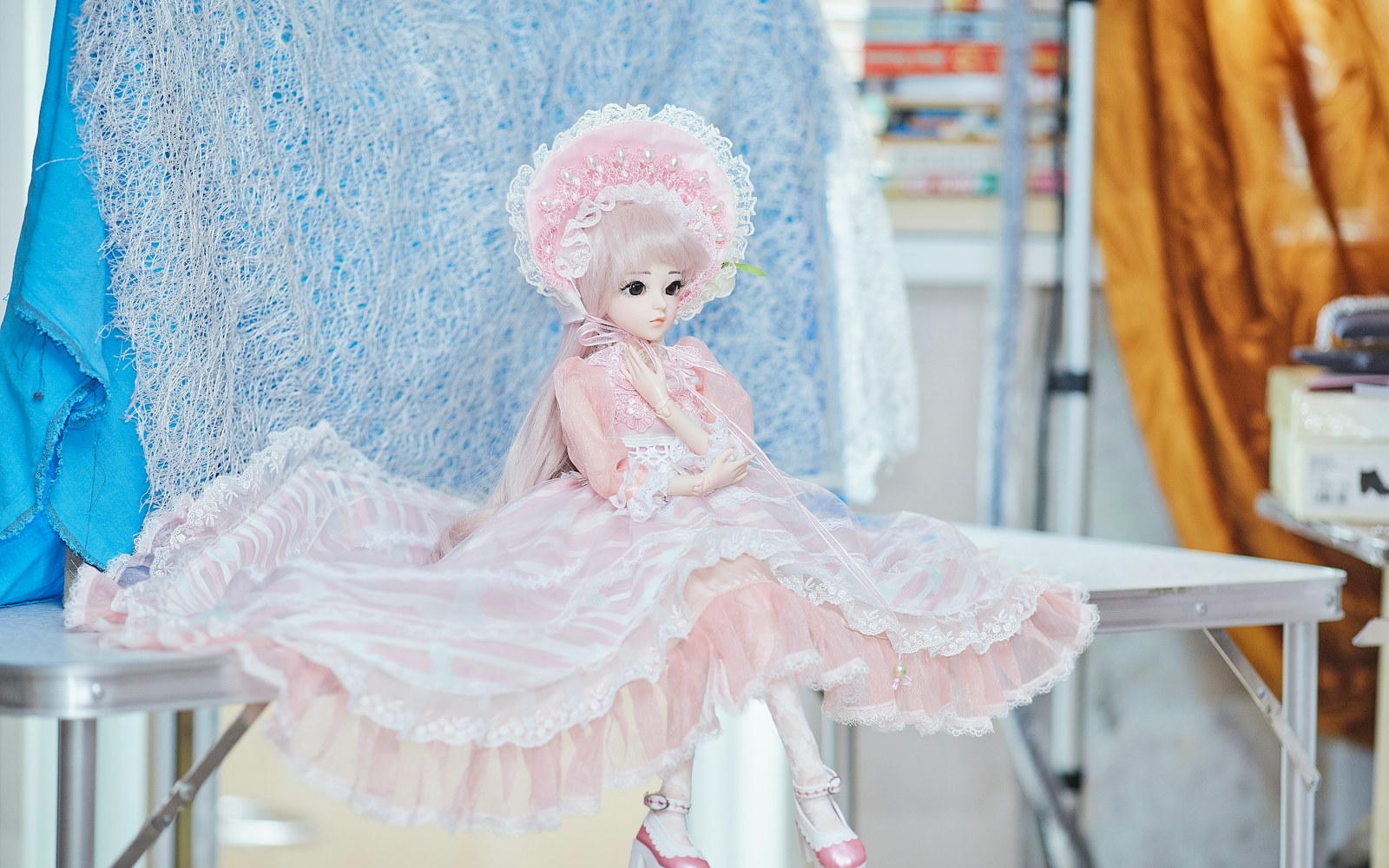
A maker can see the rounded form of a textile figure but still be unsure what supports the stitched surface. The quick answer is that volume comes from three different jobs: the fabric is the surface, an internal material creates mass, and an armature—when needed—controls position or support. Soft stuffing may be enough for a rounded torso, while a narrow limb or freestanding figure may need a wrapped core, foam, wire, or a rigid base.
No method is universally best. The right choice depends on the desired softness, scale, poseability, weight, seam stress, repair access and whether the finished piece may need cleaning or washing.
Understand the three layers of a dimensional textile figure
The surface is the fabric skin. It carries seams, colour, texture, appliqué and other visible finish. Its pattern determines much of the final silhouette, but fabric alone usually cannot maintain a substantial three-dimensional form.
The core creates volume. It may be loose polyester or wool fibre, wrapped batting, foam, or a shaped base. A core can be soft and adjustable, or firm enough to establish a controlled contour before the fabric is attached.
The armature is an internal support, often made from wire. It can help a neck stay aligned, allow a limb to hold a pose, support fingers or contribute to a standing structure. Wire does not create volume by itself: it normally needs padding, wrapping and a textile covering.
These layers can be combined. A wire may sit inside a padded arm, a wrapped fibre core may sit beneath a stitched fabric skin, or a rigid base may support a softer upper body. Thinking in layers makes it easier to solve a specific problem without making the entire figure unnecessarily hard or heavy.
Compare the main ways to add volume
Loose polyester or wool stuffing
Loose fibre is the most adaptable option for many fabric figures. Polyester filling is light and generally gives a soft, resilient form without the rigidity of a solid support. Wool can also create rounded volume and may produce a different hand and density. Both are useful where a maker wants to adjust the silhouette by adding or removing small amounts.
The limitation is control. If fibre is inserted as one large bundle, it can create lumps, hollow spots or uneven pressure along the seams. Loose filling may also shift during handling. Density depends on the material, the pattern and how firmly it is packed, so the same stuffing method will not behave identically at every scale.
Loose stuffing is often suitable for heads, torsos and rounded limbs. It can also work for hands, although small fingers and narrow wrists may need a more controlled core or a protected armature.
Wrapped fibre or batting cores
A wrapped core is built before the fabric surface is closed. Fibre, batting or similar material is shaped into a deliberate form, then wrapped or secured so it does not move as freely as loose stuffing. The textile layer is added over that prepared shape.
This approach offers more control over proportions and transitions. It can help define a torso, muzzle, shoulder or limb when loose fibre keeps shifting. It is also useful when a maker wants to compare the core with the pattern before final stitching.
A wrapped core is not automatically firm or permanent. Its stability depends on how it is built and held together. It may still need a wire support, a denser centre or attachment points where the form must carry weight.
Foam
Foam provides a predictable volume and can be useful for larger or strongly shaped forms. A maker can establish a silhouette first and place fabric over it, rather than creating the entire shape through loose filling.
The trade-off is reduced softness and more complicated sewing. Foam may resist compression, make turning or closing a piece difficult, and complicate repairs if the covering must be removed. Its suitability for cleaning depends on the specific foam, fabric, adhesives and construction; it should not be treated as automatically washable.
Foam can work for a torso, head or selected sculptural section, especially when a stable contour matters more than a very soft hand. It may be excessive for a small, flexible limb.
Wire armatures
Wire is primarily for alignment, support and pose. It can help a figure hold a bent arm, maintain a neck position or distribute support in a standing form. A wire armature may be anchored to a base when the figure needs to stand, but the attachment must be planned as part of the construction.
Wire needs protection. Ends should be smoothed or folded away, and the support should be centred and padded so it cannot abrade the fabric or distort the surface. Metal also introduces potential rust, staining and cleaning concerns, particularly in humid conditions or where the finished object may be exposed to moisture. Protection reduces risk but does not guarantee that the piece is rust-proof or washable.
A wire armature is often appropriate for poseable limbs, fingers, necks and selected joints. It may be unnecessary in a soft torso that already holds its shape through stuffing. A narrow arm or leg may combine wire with wrapped fibre or batting so that the wire controls position while the padding supplies volume.
Sculpted or rigid bases
A sculpted base gives a selected area a defined foundation. It may support a freestanding figure, establish a head or torso, or provide a firm form to which textile elements are attached. This can be useful when the work depends on a precise contour or stable stance.
The cost is softness and access. A rigid base can increase weight, restrict movement and make repairs or cleaning more difficult. Attachment points must be considered before the fabric is closed, because a finished covering may not leave room to reach the underlying structure.
Internal structure at a glance
| Method | Softness | Shape control | Poseability | Weight and care considerations | Typical uses |
|---|---|---|---|---|---|
| Loose polyester or wool stuffing | High to moderate | Adjustable but variable | Low unless combined with support | Usually light; filling can shift; cleaning depends on the whole construction | Heads, torsos, rounded limbs |
| Wrapped fibre or batting core | Moderate to high | Greater control than loose filling | Limited unless combined with wire | Can remain relatively light; access depends on the wrapping and covering | Torsos, heads, shaped limbs |
| Foam | Moderate to low | Predictable | Low unless combined with an armature | May add stiffness; sewing, repair and cleaning can be more complicated | Larger or strongly shaped forms |
| Wire armature | None by itself | Controls alignment and pose | High relative to a soft-only form | May add stiffness and weight; protect against abrasion, rust and staining | Necks, fingers, limbs, joints, standing structures |
| Sculpted or rigid base | Low | High in selected areas | Limited | Often firmer and potentially heavier; repair and cleaning access must be planned | Freestanding forms and defined foundations |
Match the method to the body part
A head usually benefits from a consistent, rounded core. Loose stuffing can work when the pattern is well fitted and the density is built gradually. A wrapped core or foam may be preferable when the face needs a stable plane or a repeatable contour. Any hard insert should be assessed for seam stress and surface distortion.
A torso often needs volume without excessive stiffness. Loose fibre or a wrapped batting core may provide a soft body, while a denser centre or selected support can prevent collapse. If the figure must stand, consider the centre of gravity and the connection to the base before closing the torso.
Hands and fingers are narrow and vulnerable to uneven filling. Small amounts of fibre, a wrapped narrow core or a protected wire can help, depending on whether softness or pose is the priority. Wire alone will leave the fingers visually thin and may place stress on the fabric.
Limbs can be soft and relaxed with stuffing, or more controllable with a wire-and-padding combination. Keep the support centred and check the wrist, elbow, shoulder, ankle and hip transitions. A firm internal structure in one section can make an adjacent soft seam bear more strain than expected.
Joints and necks need particular attention because they connect parts with different directions of movement. A soft neck may collapse under the head; a rigid one may create an abrupt transition. Use the smallest reinforcement that gives the intended result, then test the connection before permanent closure.
For a freestanding form, the core, armature and base must be considered together. Stability depends on the distribution of weight and the contact with the supporting surface, not simply on adding more filling.
Build volume without lumps or collapsed areas
Begin with small amounts of filling rather than one compact mass. Work from the deepest or narrowest area outward, using a blunt tool to guide fibre into corners and fingertips. Handle the fabric gently; forcing a large quantity through a small opening can stretch the seam or distort the pattern.
Rotate the form frequently. Check it from the front, back, side and top, and compare both sides where symmetry is intended. Hollow spots are usually easier to correct with small targeted pieces than with one tightly packed bundle.
Density should be judged by touch and silhouette. Pack enough material to support the intended shape, but leave enough flexibility for closing stitches. If the opening is straining before it is sewn shut, remove some material near the seam and redistribute it farther into the form.
Transitions need gradual support. Add material carefully at the neck-to-torso, shoulder-to-arm, wrist-to-hand and hip-to-leg connections. These areas can look thin or collapse when the main sections are full but the joining zones are not supported.
For a textile doll armature, keep the wire centred inside the form and pad it before the fabric is closed. Avoid sharp ends, exposed twists or points that can work against the surface. Test movement after padding, since a wire that is easy to bend before wrapping may become difficult to adjust afterward.
Test proportions before closing the fabric
Do not wait until every opening has been ladder-stitched shut to evaluate the figure. A partly filled form is a construction test, not merely an unfinished object.
- Prepare the components. Turn the fabric pieces, add enough temporary filling to hold their general shape, and prepare any wrapped cores or armature sections.
- Assemble provisionally. Use temporary stitches, pins placed safely away from the working area, removable ties or another reversible method to connect the head, torso and limbs.
- Check the silhouette. Compare head-to-body scale, limb length, shoulder and hip placement, hand position and the thickness of corresponding parts.
- Test balance. Set the figure in its intended resting or standing position. Observe whether the centre of gravity is supported and whether the base or feet make reliable contact.
- Test the pose. Move the figure gently through the intended range. Look for twisting, neck collapse, flattened sections, uneven limb thickness and seams under excessive tension.
- Make changes while access remains. Adjust the pattern, core size, stuffing density, attachment point or wire placement before final closure.
- Record the result. Note the pattern version, core dimensions, filling approach, approximate density by section and any armature changes. A brief construction record makes a successful build easier to repeat.
This test can also reveal when an armature is unnecessary. If the figure holds its intended position through its fabric and core alone, additional wire may only add stiffness, weight and future care concerns.
Choose for handling, poseability and future access
A soft, lightly filled figure may be pleasant to handle and easier to clean, but it can shift or lose its intended pose. A wired or rigid construction may hold a position more effectively, yet it can be heavier, less forgiving at seams and more difficult to repair.
Washability should never be assumed from the presence of a washable fabric. The complete object may contain metal, foam, adhesives, dyes, rigid bases or enclosed materials that respond differently to water, agitation and drying. Cleaning may need to be limited to careful surface treatment, depending on the materials and the maker’s guidance.
Metal armatures require particular caution. Moisture can contribute to rust or staining, while movement can cause abrasion inside the textile covering. Protecting the wire and keeping the finished piece away from unsuitable moisture may reduce risk, but it does not provide a guarantee of long-term safety.
Plan repair access before closure. Ask whether a limb may need re-stuffing, whether a wire could require adjustment, and whether a base or core can be reached without cutting a visible seam. A permanently sealed structure may look neat while leaving few options if the internal parts shift.
Troubleshoot common failures
Collapse
Check whether the core is too sparse, the pattern is too large for its support, or a neck or joint lacks reinforcement. Add structure only after identifying the weak area. More filling in the wrong place can increase seam stress without preventing the collapse.
Lumps
Remove the largest compact pieces and rebuild with smaller layers. Distribute material gradually, rotating the form as you work. A wrapped core may be a better choice when loose filling repeatedly gathers in one area.
Stiffness
Reduce packing density or soften and reposition the core. If wire is present, consider whether it is needed throughout the figure or only in a particular limb, neck or joint. Stiffness may also come from a rigid base or a fabric pattern that does not allow enough movement.
Twisting
Inspect armature alignment, seam orientation and attachment points. Do not correct a twisted figure simply by adding more stuffing; the underlying support or connection may be misaligned.
Bulging seams
Remove excess filling near the opening and close the seam gradually with controlled tension. The issue may be overpacking, a pattern that is too small for the core, or a transition that needs to be redistributed rather than compressed.
Uneven proportions
Compare both sides with the original pattern or a paper template. Reopen the most accessible section where possible, correct the core or filling, and record the change for the next version. Small differences can be intentional, but they should be chosen rather than caused by hidden construction problems.
Construction checklist
- Decide the intended softness, pose, scale and cleaning limitations.
- Treat the fabric as the surface, the filling or base as the core, and wire as optional support.
- Select the smallest combination of materials that will achieve the form.
- Build narrow or deep areas first, using small amounts of filling.
- Check density, silhouette and transitions from several angles.
- Protect and centre any wire before closing the textile covering.
- Test proportions, balance and movement while the components are still accessible.
- Inspect seams for strain, bulging and excessive stiffness.
- Plan repair access and do not assume the finished figure is washable.
- Document the pattern, core, stuffing density and armature changes for repeatability.
The most reliable approach to adding volume is not to fill every space as firmly as possible. It is to assign each internal material a clear job, test the figure before closure and accept the trade-offs between softness, control, poseability, weight and future access.