Care & Display
How to Display Mixed-Media Art Dolls: A Light, Dust and Humidity Checklist
Start with the most vulnerable material, then build a shaded, stable, low-dust display away from heat, moisture, vibration, and pressure.
By Lena Park
· 10 min read
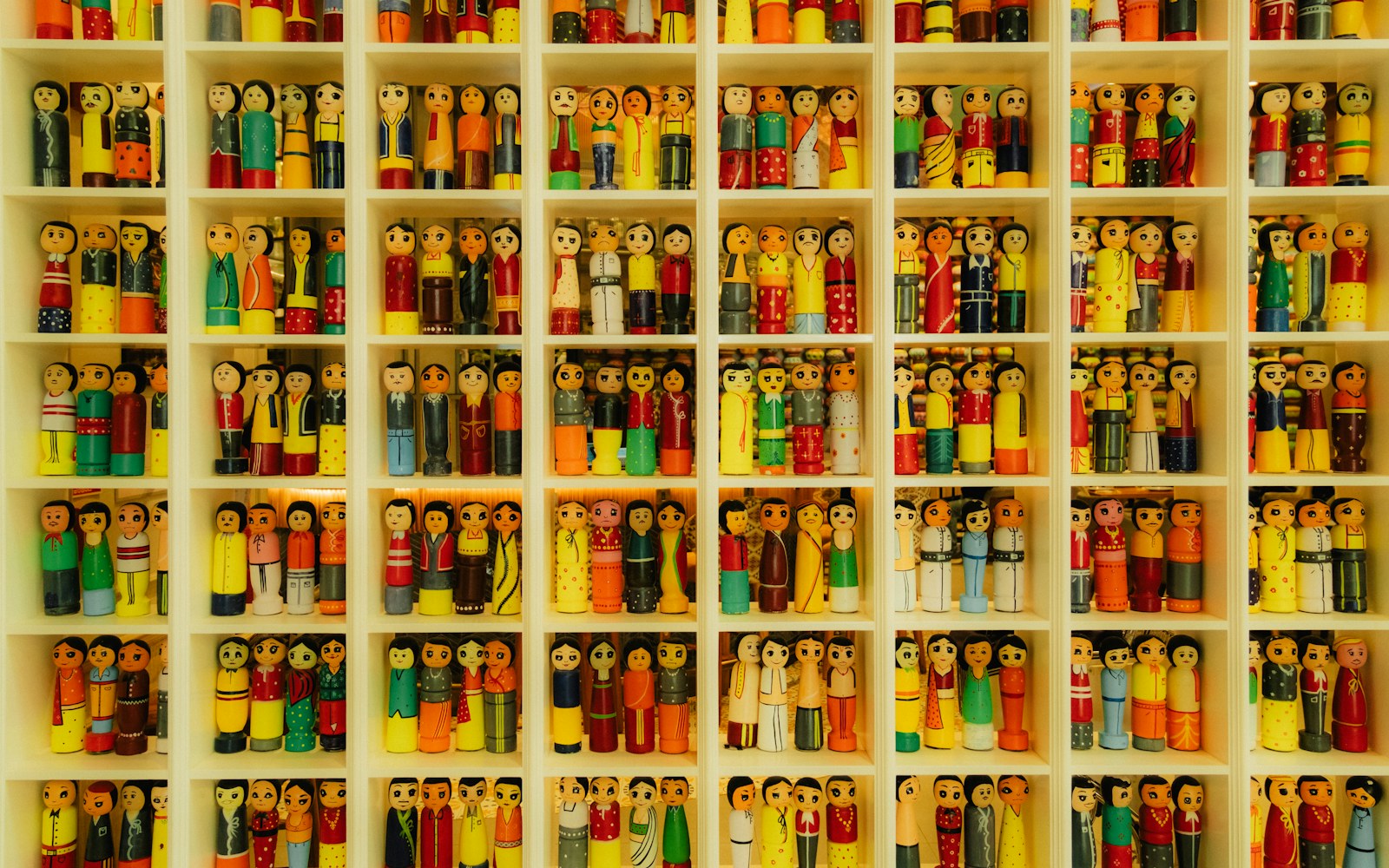
Mixed-media art dolls are difficult to display because no single care rule covers every material. A figure may combine dyed fabric, paint, clay, paper, thread, metal, glass, hair, reflective surfaces, and detachable miniature objects, each responding differently to light, dust, moisture, heat, pressure, and movement.
The safest starting point is simple: identify the most vulnerable material, then choose a stable, shaded, low-dust location away from heat and moisture. Support the doll at structurally sound points, leave clearance around projecting details, and inspect the display regularly. Exact care depends on the construction, condition, environment, and any instructions supplied by the maker.
Start with a material and risk audit
Before choosing a shelf or cabinet, make a quick inventory. Look over the doll and list every visible material, including details that may be easy to overlook:
- textiles, dyed fabrics, embroidery, thread, hair, feathers, or loose fibres;
- painted surfaces, varnished areas, clay, plaster, resin, or other modelling materials;
- paper, card, bookbinding elements, labels, or printed details;
- metal findings, wire, sequins, foil, reflective finishes, or found objects;
- glass elements, beads, lenses, containers, or small lamp-like props;
- detachable clothing, miniature objects, mounts, stands, and accessories.
Then ask what each component might be most sensitive to. A dyed textile may be vulnerable to strong light. Paper and thread may be vulnerable to dust, abrasion, or changes in moisture. Metal may corrode in unsuitable conditions, while glass may crack or become a hazard if it is loose or pressed against another part. Painted or reflective surfaces may be marked by contact, cleaning, heat, or concentrated light.
Let the most vulnerable component guide the location rather than choosing a room based only on the doll’s overall appearance. If you cannot determine how a material was made or finished, treat it as uncertain and use the gentlest display conditions available.
Photograph the doll before installation, including the reverse, stand, accessories, and original arrangement. Record any maker-provided handling or care instructions. This documentation can help you notice gradual changes and return detachable parts to their intended positions without forcing them into place.
Choose the safest room and position
Prefer indirect, moderate light
Place the doll in indirect light, away from direct sun, bright window exposure, and strong spotlights. Light can contribute to fading, colour change, uneven exposure, or heat buildup, depending on the materials and finishes. Dyed fabric, paper, painted surfaces, hair, and some found materials may not change at the same rate, so one part of a doll can age visibly differently from another.
Blinds, curtains, shaded cabinets, or UV-filtering glazing may reduce exposure, but none should be treated as a guarantee of protection. Check the display at different times of day. A spot that appears shaded in the morning may receive direct or concentrated light later. Reflective details can also redirect or concentrate light onto nearby surfaces, so watch for bright patches and localised warmth.
Keep away from heat and water
Avoid placing the doll near radiators, fireplaces, heaters, hot lamps, heating and cooling vents, kitchens, bathrooms, plumbing, damp walls, or areas where condensation forms. Do not position it beneath a skylight or beside a window that becomes hot or wet.
Rapid changes in temperature or humidity can affect materials unevenly. One component may expand, contract, soften, become brittle, distort, corrode, or loosen while another remains relatively stable. Stress can develop at joins between materials, particularly where a rigid part meets fabric, paper, thread, paint, or an adhesive. Because mixed-media construction varies so widely, a universal ideal humidity or temperature cannot be prescribed here.
Check the room, not just the shelf
Before installation, run through these room-level questions:
- Does sunlight reach the proposed position at any time of day or year?
- Is the display near a radiator, fireplace, vent, lamp, kitchen, bathroom, pipe, or exterior wall?
- Could condensation, a leak, or a cleaning spill reach the object?
- Do doors, footsteps, speakers, appliances, or nearby traffic create vibration?
- Is there enough space to clean around the doll without brushing against it?
- Could a draft move hair, paper, loose fabric, or lightweight accessories?
- Can you reach the display safely without leaning over or pulling on the figure?
Ordinary airflow is generally preferable to a sealed, stagnant space, but strong drafts can carry dust and move lightweight components. A glass cabinet may reduce dust while still allowing unsuitable light, heat, or moisture conditions inside. Treat it as one part of the display plan, not a complete solution.
Build a stable, low-stress display
Choose a level shelf, cabinet, plinth, or stand that can carry the full load without wobbling, tipping, or transmitting noticeable vibration. Check the furniture after placing the doll and accessories; a shelf that flexes or rocks is not a suitable support.
Support the figure at structurally sound points. Depending on its construction, this may mean supporting the body or base rather than pulling on costume fabric, hair, embroidery, wings, limbs, or fragile accessories. A stand should fit the form without crushing clothing or creating a narrow pressure point. Avoid improvised adhesives, pins, or tight ties when you do not know how the surface will respond.
Leave clearance around projecting details. Wings, hats, hair, tails, tools, glass parts, and extended limbs should not touch the cabinet wall, shelf edge, or neighbouring objects. Crowding increases the chance of snagging, scratching, impact, and accidental movement during cleaning.
Position detachable miniature objects where they cannot be knocked down or mistaken for loose debris. If an accessory is not securely displayed, store it separately in a clean, labelled container and photograph its original position. Do not force it into a seam, hand, pocket, or mount that was not clearly designed to hold it.
When moving the display, use two hands or disassemble it first. Lift the base, shelf, or appropriate body support; never lift a doll by its head, limbs, costume, hair, or accessories.
Control light, dust, and airflow
Dust control begins with the room and surrounding shelf. Clean the area before handling the doll, then use a clean, soft, low-suction method only on surfaces known to tolerate it. A brush or cloth can catch hair, embroidery, sequins, loose threads, paper, and unsecured components. Do not drag fabric across painted surfaces or reflective finishes.
Avoid compressed air, liquid cleaners, sprays, and direct vacuuming unless the maker’s instructions specifically permit them for the particular material. Air pressure can move or lift fragile details, while moisture and cleaning chemicals may stain, soften, dissolve, or alter unknown finishes.
A useful sequence is:
- Wash and dry your hands, or use the handling method recommended by the maker.
- Remove or secure detachable accessories if they can be safely separated.
- Dust the shelf, cabinet, and nearby surfaces first.
- Inspect the doll before touching it.
- Use the least forceful dry method suitable for the surface.
- Stop if a thread, fibre, paint layer, paper edge, or accessory begins to move.
- Return clean, dry accessories only after checking their position and stability.
Do not use a cover that presses against the doll. If a cabinet or cover is appropriate, allow space around the object so fabric, hair, paper, and projecting parts cannot touch it. Consider whether the enclosure could trap moisture or create heat before closing it for long periods.
Treat materials as separate care problems
Painted surfaces
Paint can be vulnerable to abrasion, tackiness, flaking, or changes in appearance. Keep painted areas from touching shelves, packaging, fabric, glass, or hard accessories unless that contact is clearly part of the construction. Do not assume a painted surface can tolerate water, polish, solvents, or ordinary household dusting products.
Dyed textiles, embroidery, and thread
Textiles may fade or change unevenly in strong light. They can also snag, crease, bear unintended weight, or collect dust in folds and stitching. Keep costume fabric away from sharp shelf edges and avoid pressure from stands, ties, or neighbouring objects. Do not pull loose threads or brush across embroidery without specific guidance.
Paper and bookbinding details
Paper, thread, and embroidery may respond differently to light, handling, and environmental change. Keep paper edges flat and supported where appropriate, with no bending or pinching at joins. Avoid placing paper against damp walls, hot surfaces, or rough mounts. Do not use tape or adhesive to repair or secure an uncertain paper component.
Clay and modelling materials
Clay and similar modelling materials may be vulnerable to impact, pressure, heat, or changes in condition, depending on how they were made and finished. Give protruding forms extra clearance and avoid stands that press into soft-looking or unsupported areas.
Metal and reflective details
Metal findings, wire, foil, sequins, and reflective finishes should not be treated as interchangeable. Some may tarnish or corrode in unsuitable conditions; others can scratch nearby paint, glass, paper, or fabric. Keep hard edges from rubbing against delicate surfaces, and check whether reflective parts receive concentrated sunlight or spotlight heat.
Glass elements
Give glass extra clearance and support. Inspect for looseness, cracks, chips, sharp edges, or contact with nearby parts. A cracked or unstable glass element should not be handled casually. Stop and seek advice if moving it could cause injury or further damage.
Be especially cautious with lamp-like props
A small object that resembles an oil lamp, lantern, candle, or other light source may be purely decorative. Do not add fuel, light a wick, use an open flame, or generate heat near the doll unless the maker has explicitly designed and documented the object for that use.
Even a small flame or hot bulb can create heat, soot, smoke, fire risk, and uneven exposure. Keep decorative lamp-like props stable, dry, and separated from combustible textile, paper, hair, and painted components. If the object’s intended function is unclear, treat it as decorative and do not test it.
Monthly inspection checklist
Inspect the doll and its surroundings at least monthly, and again after a move, leak, cleaning project, seasonal change, or alteration to heating, cooling, or lighting. Look for:
- fading, discolouration, or uneven light exposure;
- tackiness, flaking, lifting, or changed appearance on painted areas;
- fraying, loose threads, snags, distortion, or unintended creasing;
- changed shape, loosened joins, or movement in a stand or mount;
- corrosion, tarnish, sharp edges, chips, cracks, or looseness in glass and metal;
- condensation, dampness, mould-like growth, or unusual odour;
- pests, dust buildup, or debris collecting in folds and recesses;
- fabric, paper, hair, or an accessory touching a hard edge or bearing weight;
- miniature objects that have shifted, fallen, or been placed under pressure.
Photograph any new change and note the date, location, environmental event, and action taken. Comparison images are more useful when the camera angle and lighting are reasonably consistent.
If deterioration is active, widespread, mould-like, structural, or associated with valuable or irreplaceable work, stop cleaning and limit handling. Seek advice from a qualified conservator or the maker. Do the same if you cannot tell whether a substance is dirt, adhesive, mould, corrosion, or damaged finish.
Common display mistakes
The most frequent problems are avoidable:
- placing a doll in direct sun because the room looks bright and attractive;
- using a hot lamp, radiator, fireplace, or vent as part of the display;
- assuming a glass cabinet solves heat, light, or moisture problems;
- supporting a figure by its costume, hair, limbs, embroidery, or accessories;
- crowding several objects so projecting details touch one another;
- wiping across painted, textile, paper, or reflective surfaces without checking them;
- using liquid cleaner, adhesive, pins, tight ties, compressed air, or direct vacuuming on unknown materials;
- burning a decorative lamp-like prop or placing an open flame near the doll;
- storing detached parts loose, unlabelled, or in contact with unsuitable materials;
- failing to recheck the display after moving furniture or changing bulbs.
Final setup checklist
Before leaving the doll on display, confirm:
- The most vulnerable material has been identified.
- The position receives indirect rather than direct or concentrated light.
- The doll is away from heat, water, condensation, strong drafts, and vibration.
- The shelf, cabinet, plinth, or stand is level, stable, and load-appropriate.
- Support does not crush fabric or place pressure on fragile details.
- Projecting parts have clearance from edges, walls, glass, and neighbouring objects.
- Glass and hard components cannot scratch or press against delicate surfaces.
- Detachable accessories are secure, labelled, or stored separately.
- Dust can be removed from the surrounding area without brushing the doll.
- The arrangement has been photographed and any care instructions recorded.
- A monthly inspection has been scheduled.
A careful display is not about eliminating every environmental risk. It is about reducing avoidable exposure, respecting the different materials in one object, and noticing change early enough to respond thoughtfully.