Care & Display
How to Display Needle-Felted and Textile Art Dolls Without Dust, Fading, or Distortion
Choose the least-enclosed display that keeps light low, support secure, delicate details clear, and cleaning manageable in your home.
By Lena Park
· 11 min read
Collectors want to display soft wool, fabric, and embellished figures while reducing dust buildup, colour fading, crushed forms, unstable poses, and snagging from nearby objects. The safest everyday approach is to place an art doll in low, indirect light, support it in a stable pose, leave generous clearance around it, limit handling, and then add only as much dust protection as the room requires.
For a robust doll in a calm, regularly cleaned room, an open shelf may be enough. Where household dust, pets, children, cooking residue, frequent handling, or bright windows are harder to control, an individual cover or glazed cabinet is usually the more practical choice. No display method is universally safe: the right arrangement depends on the doll’s materials, construction, prior condition, and the room it will inhabit.
Assess the doll and the room before choosing a display method
Start with the object, not the cabinet. A needle-felted figure may look solid while still having a soft surface that can flatten or catch. A textile doll may have internal armature, stuffing, stitched joints, glued trims, or layered garments that respond differently to weight, light, and contact.
Make a quick condition record before installation. Photograph the doll from the front, sides, back, and above, including close views of vulnerable details. Note any existing lean, loose thread, surface dust, colour change, cracks, detached beads, bent wire, insect evidence, or previous repairs. These photographs make gradual change easier to recognise later.
Then assess the proposed location. Look for:
- direct sun patches at different times of day and year;
- a bright window-facing wall, even when sunlight does not strike the doll directly;
- radiators, vents, fireplaces, portable heaters, or hot lamps;
- damp exterior walls, condensation-prone areas, or rooms with large swings in temperature or humidity;
- kitchen vapour, smoke, aerosols, or heavy household traffic;
- pets, children, doors that slam, shelving vibration, and passing bags or clothing.
The six main risks are light, dust and household soil, pests, gravity and distortion, handling, and unstable temperature or humidity conditions. A case reduces some of these risks, especially dust and casual contact, but it does not cancel the effects of strong light, heat, poor placement, or an unsuitable mount.
Identify material-specific vulnerabilities
Needle-felted wool can collect dust within its fibrous surface and may compress where it rests against a support, shelf, garment, or another doll. Long wool hair, loose fibres, and lightly felted additions are especially prone to catching.
Silk and richly dyed textiles may be particularly vulnerable to light. Hand-dyed fabrics, painted cloth, coloured threads, and dyed wool can fade unevenly, and any change may be irreversible. Do not assume a pale colour is safe simply because fading is harder to see.
Embroidery and beadwork introduce raised surfaces and small attachment points. Threads can snag, while beads, sequins, and stitched ornaments can loosen under repeated handling or pressure from clothing and mounts.
Fabric layers and long garments can slowly crease, stretch, slump, or transfer their weight to a narrow point. A heavy skirt or cape may alter a doll’s balance even when the body itself appears steady.
Wire, armature, branch-like details, wings, antennae, and tails need open space. They can bend when a cover is lifted, when dolls are crowded, or when cleaning cloths and sleeves pass too close.
Choose the display format by balancing protection and access
The best textile art doll display is usually the least-enclosed option that still suits the actual risks of the room. More enclosure brings more dust protection, but can reduce access for inspection and may make a poorly lit or poorly ventilated location harder to notice.
| Display format | Best suited to | Dust protection | Access and visibility | Key cautions |
|---|---|---|---|---|
| Open shelf | Robust dolls in a low-dust, low-traffic room | Low | Excellent access and visibility | Needs regular room cleaning; exposed to accidental contact, pets, and snagging |
| Individual acrylic cover or vitrine | Small focal pieces and delicate miniatures | Moderate to high | High visibility; access requires lifting the cover | The cover must not touch the doll or catch projections when removed |
| Glazed cabinet | Collections in homes with dust, pets, or frequent activity | High | Good visibility; slower access | Light, heat, crowding, and contact with glazing remain possible |
| Rotation with covered storage | Light-sensitive or especially delicate work | Variable | Display time is limited by choice | Storage must also be clean, supported, dark enough, and regularly checked |
Open shelves
An open shelf works best when the room is already clean, calm, and protected from direct sun. It offers easy viewing and makes routine inspection straightforward. It also exposes the doll to more settling dust, airborne household soil, accidental brushing, and disturbances from nearby objects.
Use open display only when you can give each doll enough space. Keep projecting wire, fibres, beadwork, and garments well clear of book spines, plant leaves, rough baskets, trailing electrical cords, and adjacent figures.
Individual acrylic covers or vitrines
A clear cover can be a useful compromise for a single doll or a small group. It helps reduce settling dust and discourages casual touching while retaining visibility. Before committing to one, test its footprint and lifting path.
There should be ample clearance above, beside, and behind the doll. Do not choose a cover that nearly touches wool hair, raised embroidery, a wing, or an antenna. When removed, it should lift straight up without scraping against delicate details. A cover that is awkward to handle may create more risk during access than it prevents between viewings.
Glazed cabinets
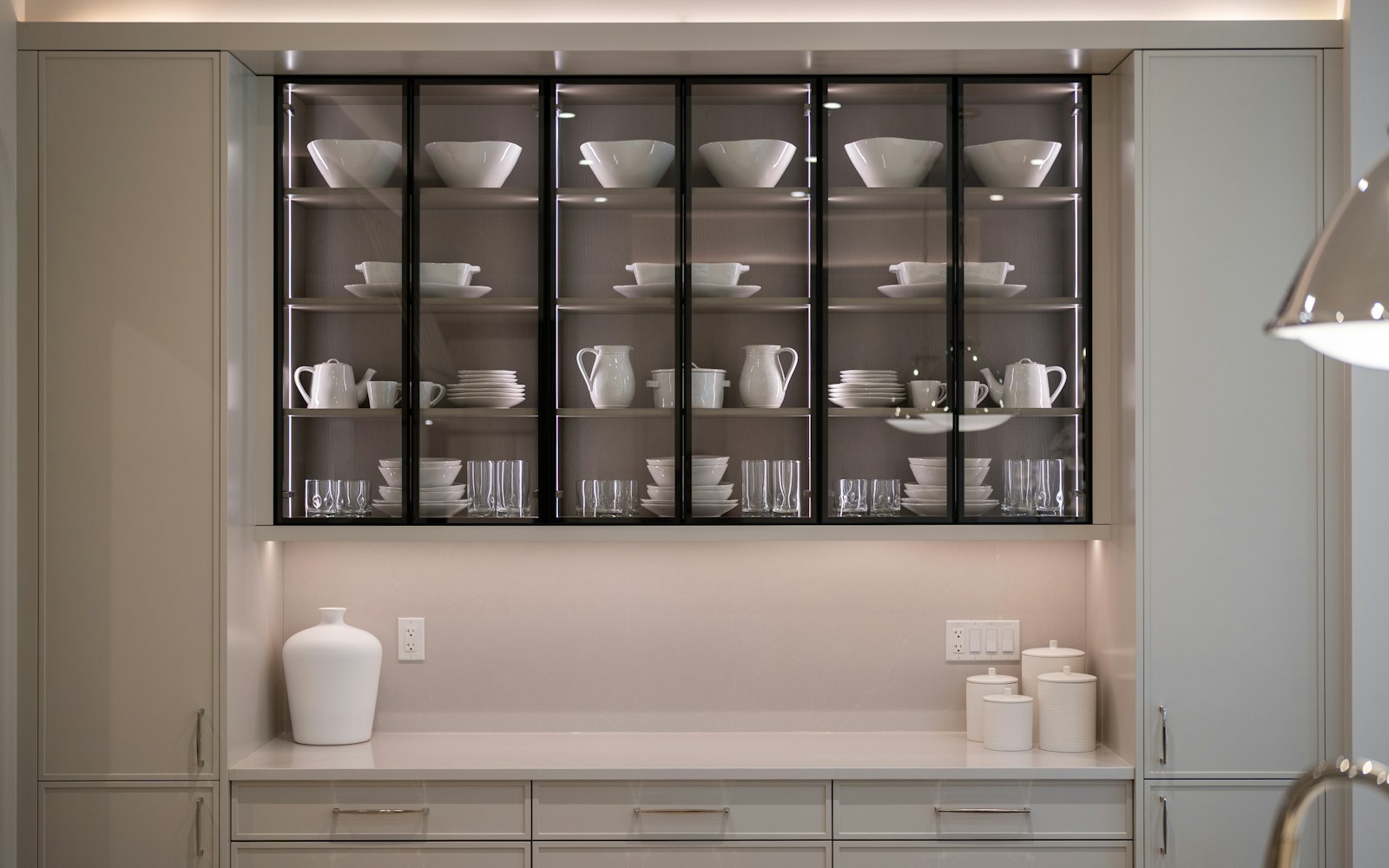
A glazed cabinet is often the most workable display case for handmade dolls in active homes. It can reduce dust, pet contact, and accidental handling across a collection, while allowing the dolls to remain visible.
Choose generous internal dimensions rather than filling every shelf. The doll should not touch the glazing, the back panel, or another object if it shifts slightly. Leave room for the full silhouette of hair, garments, tails, and wire details.
Place the cabinet away from direct sunlight, heaters, damp walls, and kitchens. Inspect its interior as carefully as its exterior. A cabinet can still accumulate dust, receive strong window light, develop odours, or reveal that a doll is slowly leaning against the back.
Rotation and covered storage
Rotation can be sensible for dolls made with particularly light-sensitive dyes, fragile surface work, or uncertain materials. It is also useful when there is no reliably low-risk permanent display location.
There is no universal rotation schedule. Base the decision on the brightness of the room, the object’s sensitivity, how much you value frequent viewing, and whether covered storage can provide a clean, supported, low-light alternative. Rotation reduces practical exposure only if the off-display arrangement is genuinely safer.
Control light without chasing a universal safe limit
For art doll UV light damage and visible fading, placement matters more than a promised number of safe hours. Avoid direct sun entirely where possible. A few bright sun patches can create concentrated, uneven exposure across a face, costume, or one side of a figure.
Prefer indirect daylight or gentle artificial lighting. Position lights so they do not heat the object or create a concentrated bright spot on one area. Move the doll farther from windows and lamps rather than relying on a bulb label alone.
Treat dyed wool, silk, painted surfaces, hand-dyed fabrics, coloured embroidery threads, and some adhesives as potentially light-sensitive. Colour change can be subtle at first, particularly where a garment folds over itself or where hair covers part of a face.
Practical layers of light control include:
- placing display furniture on a less exposed wall;
- using blinds or curtains during the brightest part of the day;
- fitting suitable UV-filtering window treatments where appropriate;
- keeping cases away from the strongest window-facing position;
- using controlled artificial light rather than relying on intense daylight.
Neither glass, acrylic, a UV filter, nor a particular lamp should be treated as complete protection. The real risk depends on the light source, distance, direction, exposure pattern, dyes, finishes, and how long the object remains on view.
Prevent distortion with stable bases and tailored support
Gravity acts slowly. A tall doll with a heavy head, soft legs, narrow feet, long garments, or a flexible internal armature may initially look stable but gradually slump, twist, or develop pressure marks.
Start with a level, stable base that is proportionate to the doll’s height and centre of gravity. Test for wobble before leaving the doll unattended. If the base shifts when the shelf is lightly touched, it is not stable enough.
Support the body only at structurally strong areas. Avoid compressing soft felt or relying on delicate clothing, hair, wings, tails, embroidery, or beadwork to hold a pose. A discreet custom mount or back support may help a leaning, seated, suspended, or top-heavy doll, but fit matters.
Use smooth, stable support materials and add an appropriate barrier layer where contact could abrade the surface. Do not assume that foam, fabric, wood, adhesive pads, wire, or other mount components are suitable for direct contact simply because they are commonly available. Test the physical fit carefully, and revise a mount that leaves an impression, causes rubbing, or pulls the doll off balance.
Give fragile details a buffer zone
Clearance is part of support. Leave empty space around wire details, branch-like elements, beadwork, antennae, long fibres, and elaborate sleeves. Avoid crowding dolls together merely to fit more onto a shelf.
For an especially delicate figure, consider its whole movement path: how it enters the case, how a door opens, how the cover lifts, and where your hands need to go. A display is only safe in use if it can be accessed without brushing nearby objects.
If a soft doll changes shape, do not force it back into position. Significant resistance, unknown internal construction, or a newly altered silhouette are reasons to pause. Photograph the change, check whether the mount or gravity is contributing, and seek specialist advice if the structure appears compromised.
Build a low-contact routine for dust, pests, and change
The first line of cleaning is not cleaning the doll. Keep the surrounding room, shelf, and cabinet clean so less dust reaches the object. Wipe and vacuum the area only after moving the doll to a padded, secure place or protecting it from nearby disturbance.
Inspect the figure periodically under good light. Look for:
- dust caught in wool or textile texture;
- loose threads, beads, or trims;
- changed colour or a new bright patch from light exposure;
- sagging, leaning, flattened wool, or mount contact marks;
- webbing, larvae, frass-like debris, insect bodies, or unexplained fibre loss;
- mould-like spotting, musty odours, condensation, or sticky residue.
Before handling, remove rings, bracelets, watches, and anything that could snag. Clear a padded work surface. Support larger dolls with two hands from their most structurally secure areas, rather than lifting by a head, arm, costume, or projecting element.
Gentle dust removal
For a small amount of loose surface dust, use the gentlest approach compatible with the construction. A very soft brush may be used near the surface rather than dragged firmly across it, while the area being worked on is supported. Stop if fibres pull, embellishments move, or the surface catches.
Needle-felted wool often benefits from restraint. Repeated brushing can disturb fibres or alter a carefully worked texture. Embroidery, beadwork, and loose hair should be approached even more cautiously because a brush can catch on raised details.
Avoid household sprays, adhesive lint rollers, vigorous vacuuming, compressed air, wet wiping, and improvised stain removal. These methods can pull fibres, spread dirt deeper into a surface, dislodge beads, drive moisture into textile layers, or change fragile finishes.
When to call a conservator
A little loose dust does not automatically require professional treatment. Isolate the doll and consult a qualified textile or objects conservator when there is active pest evidence, mould, water damage, sticky residue, widespread grime, dye transfer, loose structural components, detached embellishment, or uncertainty about safe cleaning.
Do not use home chemical treatments, wet cleaning, pest treatments, or reshaping methods as a general response to these problems. The apparent surface issue may be connected to dyes, adhesives, stuffing, armature, prior repairs, or internal damage that is not visible from the outside.
Document the display and review it over time
A good display plan is adjustable. Keep the initial condition photographs with brief notes on the doll’s location, light direction, cabinet or cover type, base, mount, and any existing vulnerabilities. Add new photographs after a move, a change in room use, a lighting alteration, or any notable shift in condition.
Review the arrangement when seasons change or when the home changes: a new pet, rearranged furniture, a different cleaning routine, a new lamp, or a move from open shelving to a cabinet can all alter risk.
If the doll is in a case, inspect both the doll and the enclosure. Check for dust, contact points, condensation, odours, leaning, and any place where hair, fabric, or wire approaches the glazing. If it is on an open shelf, inspect the nearby environment as well as the object: a newly placed plant, rough decorative object, or frequently used shelf may be the real problem.
A simple decision rule
Choose the simplest textile art doll display method that keeps light low, contact limited, support stable, delicate details clear, and cleaning manageable in your actual home. An open shelf can be appropriate in a quiet, controlled room. An acrylic cover or glazed cabinet may be wiser where dust and handling are harder to prevent. For highly light-sensitive or fragile work, rotation may offer the most realistic compromise between seeing the doll and reducing cumulative risk.
The goal is not to seal a handmade figure away from view. It is to make viewing gentle: low light, stable support, enough breathing room, and enough documentation to notice change before it becomes damage.