Collector's Guide
How to Document a Handmade Art Doll Before It Enters a Collection
Create a clear, dated record before display or storage so the figure’s identity, condition, materials, and ownership history do not get separated from the object.
By Lena Park
· 9 min read
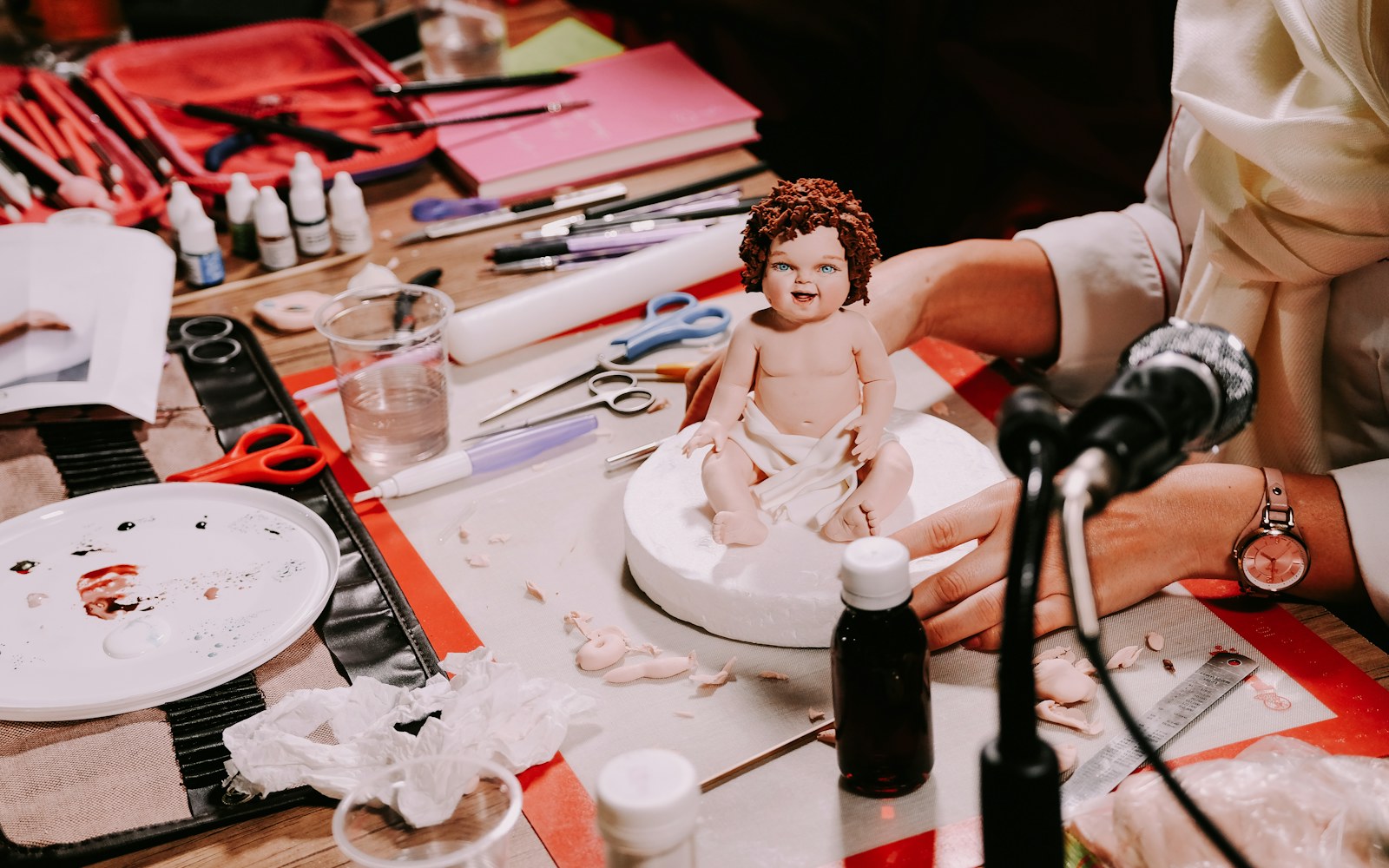
If information about a handmade art doll is not recorded when it arrives, it can quickly become difficult to establish what the figure is, who made it, how it was constructed, what came with it, or what condition it was in at acquisition. The simple answer is to create a dated, uniquely identified record before the figure enters regular display, storage, alteration, or transfer.
This record does not need to be elaborate. It can begin with one inventory entry, a folder of original documents, a systematic set of photographs, and an initial condition report. The same structure can later expand into a searchable collectible figure inventory.
Start with a provenance record at acquisition
Assign the figure an inventory ID that will remain with its records. A format such as AD-2025-001 is sufficient; the important qualities are consistency and uniqueness. Add the acquisition date and create the record before unpacking further or placing the figure on display.
Begin with these fields:
- Inventory ID
- Title or identifying description
- Maker, if known
- Creation date, if known
- Materials, as reported by the maker or seller
- Dimensions, with the method of measurement noted where useful
- Edition number, edition size, or one-of-a-kind status, if documented
- Acquisition date and source
- Current location
- Included accessories, base, packaging, labels, and paperwork
A description should help identify the object without relying on memory. For example, record the figure’s general form, clothing, distinctive surface details, markings, or attached components. Avoid turning an impression into a fact: “small seated figure with painted face and stitched textile clothing” is safer than assigning an unconfirmed material or construction method.
Separate evidence from observation
Every entry should show where its information came from. Useful labels include:
- Maker-supplied: information stated by the artist or studio, such as listed materials or a stated creation date
- Seller-supplied: information provided in a listing, invoice, or seller’s correspondence
- Documented: information supported by a certificate, receipt, label, or other record
- Collector-observed: something visible or measured by the collector
- Unconfirmed: a possibility that has not been established
This distinction is central to responsible art doll provenance documentation. A maker’s note may support authorship or materials, while a receipt may support the purchase and date. Neither necessarily establishes every detail about authenticity, condition, ownership history, or value. A collector’s observation can describe a visible mark without proving what caused it.
Gather maker and purchase evidence
Save the art doll certificate of authenticity, if supplied, along with signed notes, hangtags, packaging labels, invoices, receipts, edition cards, and correspondence. Preserve the original wording rather than rewriting uncertain information in more definite terms.
A certificate may help document the maker, title, edition information, or date associated with a work. It should not automatically be treated as proof of every material, condition, ownership, authenticity, or value claim. Record what the document actually supports.
A useful evidence log might include:
| File or item | What it may support | Notes |
|---|---|---|
| Certificate | Identity, maker, title, edition details | Preserve wording and signatures |
| Receipt or invoice | Purchase date, seller, transaction | Store payment details securely |
| Packaging label | Maker, title, edition, handling information | Photograph before discarding or altering packaging |
| Correspondence | Materials, construction, care, or delivery details | Retain the full exchange where possible |
| Seller listing | Description available at purchase | Save a dated copy if permitted |
Keep provenance evidence separate from personal notes and later condition assessments. For example, a folder named 01_provenance can contain scans of the certificate and receipt, while 03_condition contains the acquisition report and photographs. This prevents a later opinion from appearing to be part of the maker’s original documentation.
If a record says a material is “possibly” present, retain that qualification. Do not convert “believed to be” into a confirmed material simply because the surface looks familiar. Handmade construction can combine materials in ways that are not identifiable from appearance alone.
Photograph the figure systematically
Photographs provide a visual reference for identity, condition, components, and later changes. Take them at acquisition, before repairs, cleaning, rearrangement, or extended display. Handle the figure as little as practical, especially if parts are loose, textiles are fragile, or the construction is unfamiliar.
Create a consistent set of overall views:
- Front, back, left, and right sides
- Top and underside views when safe and relevant
- The figure on its base, if it has one
- The figure separated from the base only when this can be done safely
- A scale reference when dimensions or changes in size need to be understood
Then photograph identifying and vulnerable details:
- Face, hands, feet, clothing, and other distinctive features
- Base, joins, fastenings, and attachments
- Labels, signatures, stamps, edition marks, and handwritten numbers
- Accessories and removable components
- Existing scratches, chips, cracks, stains, discoloration, loose parts, or worn textiles
- Areas that are difficult to see but may be important during future handling
Use an uncluttered background, even lighting, and consistent camera distance where possible. Avoid applying filters or editing the original files. Access copies can be resized for everyday use, but retain the original image files and keep them linked to the inventory ID and date.
A filename such as AD-2025-001_overall-front_2025-03-08.jpg is more useful than dollnew.jpg. For a detail, use a name such as AD-2025-001_face-mark_2025-03-08.jpg. If an image shows an area of damage, describe what is visible without embedding an unverified cause in the filename.
Create an acquisition condition report
The initial art doll condition report should describe the figure as received, before cleaning, repair, or modification. It is a dated snapshot, not a promise that the object will remain unchanged.
Record visible conditions such as:
- Scratches, chips, cracks, dents, or abrasions
- Discoloration, stains, dust, or surface deposits
- Loosened, detached, or unstable parts
- Worn, frayed, crushed, or faded textiles
- Unstable bases or attachments
- Missing accessories, labels, fastenings, or packaging components
- Previous repairs or replacement parts that are evident
- Damage or compression caused by packing or transit
Use descriptive language. “Dark mark visible near the left shoulder” records an observation. “Smoke damage” or “adhesive failure” interprets a cause that may not be established. If the cause matters, note it as uncertain and seek appropriate specialist advice rather than testing the area yourself.
Include measurements, packing condition, and the components that arrived with the figure. Dimensions may include height, width, and depth, but note whether a base, hat, extended limb, or other removable part was included in the measurement. If the figure is unusually fragile or its construction is uncertain, avoid manipulating it to obtain a measurement and consult a qualified conservator or another appropriate specialist.
The condition report should point to the relevant photographs. A note such as “surface mark at back of right hand; see AD-2025-001_hand-back_2025-03-08.jpg” creates a useful connection between written and visual records.
Build a record that can be updated
Do not overwrite the acquisition record when the figure changes. Add dated updates so the history remains visible. Useful additions include:
- Repair invoices and treatment notes
- Conservation or care advice
- Replacement parts and the reason for their use
- New photographs after repair or cleaning
- Insurance documentation, stored with appropriate privacy controls
- Changes in location, display, packing, or ownership
- Damage discovered after a move, incident, or environmental change
For each intervention, record the date, provider, materials used if known, and what was changed. Keep before-and-after photographs. If a repair was undertaken by someone other than a qualified specialist, describe it accurately without presenting it as conservation treatment.
After a repair, move, incident, or sign of deterioration, add a new condition entry. Compare it with the original rather than replacing the original description. This makes it possible to distinguish an existing mark from a later change.
For editions, use the same fields for every work: inventory ID, title, maker, edition information, dimensions, materials as documented, acquisition details, photographs, and condition history. Consistent fields make handmade doll records easier to search and compare. They do not fill gaps in the evidence. An undocumented edition number should remain undocumented rather than being inferred from the numbers recorded for other pieces.
Store and review the collection file securely
A structured digital folder can support one figure or a large collectible figure inventory. One possible arrangement is:
AD-2025-001/
  01_provenance/
  02_purchase/
  03_photographs/
    2025-03-08_acquisition/
  04_condition/
  05_repairs-and-treatment/
  06_moves-and-insurance/
  07_notes/
Use stable filenames based on the inventory ID, document type, and date. Keep original scans, photographs, and correspondence. Create access copies only when necessary, and avoid relying on a single device or online account. Maintain at least one separate backup, and periodically check that files open and images remain readable.
A paper backup can hold core information such as the inventory ID, description, maker, dimensions, acquisition date, location, and a list of associated documents. Store original certificates and receipts in protective, clearly labelled housing appropriate to the materials. Do not place personal payment details or full insurance documents in an unsecured shared folder.
Review the record periodically. Confirm the current location, check that the photograph set is still accessible, add relevant condition changes, and verify that ownership or contact information is current. Personal, payment, and insurance information should have access controls suited to its sensitivity.
Quick documentation checklist
For each handmade art doll, confirm that you have:
- A unique inventory ID and acquisition date
- A title or identifying description
- Maker and creation date, if known
- Materials, dimensions, and edition or one-of-a-kind status, with sources identified
- Certificate, receipt, labels, provenance papers, and relevant correspondence
- Overall and detail photographs linked to the inventory ID and date
- Photographs of the base, signatures, labels, accessories, and vulnerable areas
- An initial art doll condition report
- Notes on missing components, packaging, and previous repairs
- A current location
- A repair, replacement, movement, incident, and ownership log
- A secure digital folder and at least one separate backup
- A paper backup for core information, where practical
Common documentation mistakes
Treating the certificate as the whole record
A certificate is one piece of evidence. It may not describe current condition, every material, included accessories, ownership history, or later repairs. Keep it with the wider record.
Recording opinions as facts
“Likely resin,” “probably original,” and “stain caused by moisture” are interpretations unless supported by reliable documentation or specialist assessment. Label them as unconfirmed or leave them out of the factual fields.
Photographing only the front
The back, underside, base, labels, joins, and accessories can be important for identification and condition. A systematic set is more useful than a single attractive image.
Editing away the original condition
Do not clean, touch up, replace, or rearrange parts before the acquisition record is complete. If an intervention is necessary for safety, record what happened and why as soon as possible.
Keeping files under vague names
Names such as scan1.pdf and newphoto.jpg are difficult to connect to an object years later. Use the inventory ID, subject, and date.
Promising more than documentation can provide
Good records can support care, communication, transfer, and future assessment. They do not guarantee authenticity, insurance acceptance, future value, or a particular conservation outcome. Those decisions may require the relevant maker, insurer, appraiser, conservator, or other qualified professional.
The goal is not to turn a handmade figure into a bureaucratic file. It is to keep the object’s evidence, observations, and changing condition together. Starting with one dated record makes the system manageable; using the same fields for every addition allows that record to grow into a reliable collection history.