Care & Display
How to Store Handmade Textile Dolls with Delicate Clothes and Accessories
Support each vulnerable feature separately, stop movement without compression, and use a rigid, lined box in a stable storage location.
By Lena Park
· 10 min read
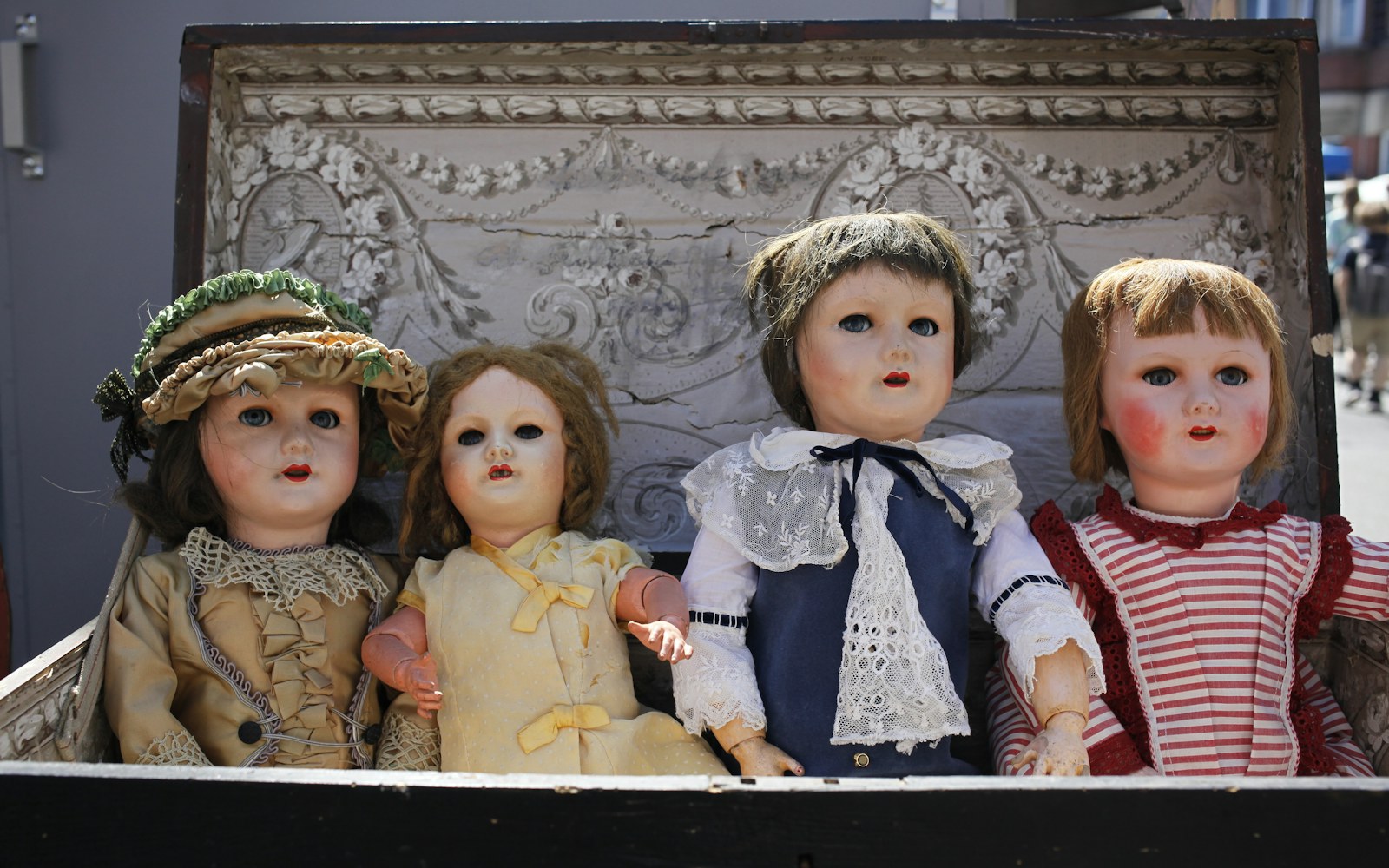
Owners need a safe way to move, ship, or store handmade figures whose clothing, pleats, wired details, appliqué, embroidery, or small accessories can crease, snag, transfer colour, or lose shape. The safest general approach is to treat each doll as a mixed-material object: document its condition, support every vulnerable feature separately, immobilise it without compression, and place it in a rigid box with suitable barriers between the work and uncertain materials.
For a short shipment, the goal is to prevent shifting, rubbing and impact. For longer-term textile doll storage, the same support matters, but so do darkness, cleanliness, stable cool and dry conditions, air circulation, and regular inspection. No box or packing material can guarantee against fading, pests, mould, dye transfer or breakage; the right choice depends on fibres, dyes, paint, wire, plastics, metals, construction and the artist’s guidance.
Assess the doll before you pack it
Do not begin by wrapping. First establish what the doll needs protection from.
- Photograph the front, back and sides in even light.
- Take close-ups of the face, hair, garments, pleats, embroidery, appliqué, wired details, shoes and accessories.
- Record existing concerns: loose stitching, detached elements, cracked paint, flattened stuffing, brittle fabric, bent wire, insect evidence, staining or suspected dye transfer.
- Make a simple packing map. Mark pressure points, projections, vulnerable surfaces, loose layers and areas that should not touch neighbouring materials.
- List every detachable accessory. Photograph it beside the doll, assign it a label or number, and note where it will be packed.
This record is useful after a move or shipment, when subtle changes can otherwise be hard to identify. It also prevents a small hat, charm, shoe or prop from becoming separated from the figure.
Decide what may travel attached
Do not remove a component simply because it appears removable. A tightly stitched hat, glued decoration or wired accessory may be safer left in place than handled repeatedly. Remove only an item that you know was designed to detach, and only when separate packing creates less risk than leaving it on the doll.
If an accessory is safely detachable, package it in its own padded, clearly labelled enclosure. Hard pieces should not travel loose against textile surfaces.
Match the packing method to the risk
The aim is immobilisation without compression. Padding fills empty space and holds a stable position; it should not bind the doll tightly, flatten its clothes or force wire into a new shape.
| Feature or risk | What to support or separate | What to avoid |
|---|---|---|
| Pleated, gathered or layered skirt | Loosely fill the volume and support folds from within and around the skirt | Folding the skirt sharply, packing it flat or pressing it under the body |
| Head, neck, arms and legs | Create soft padded rests so parts cannot roll, knock or rub | Pulling limbs into a straighter pose or tying them down tightly |
| Wired wings, antennae or projections | Build a custom padded zone around the existing shape | Bending wire to fit a box or laying weight across projections |
| Embroidery, beads, appliqué and textured surfaces | Keep raised areas facing into protected open space where possible | Friction against tissue packed too tightly, cardboard or hard accessories |
| Dark dyes, leather-like elements, paint, metal or plastic | Interleave with a suitable clean barrier and avoid direct contact with textiles | Assuming unlike materials are compatible over time |
| Small accessories | Pack separately in labelled, padded containers | Loose objects moving around inside the main box |
Support shape rather than restraining it
A full skirt needs room to remain three-dimensional. Use small amounts of clean, crumpled acid-free tissue or clean unprinted cotton, where suitable, to gently fill hollows and maintain the intended silhouette. Place supports beneath or around a fold rather than pushing directly through a fragile seam or decorative surface.
For a doll with a large head, narrow neck or soft body, build a cradle that keeps the head and torso from shifting. Support limbs in their natural resting positions. If hands are embroidered, painted, beaded or posed around an object, make space around them rather than pressing padding over their surfaces.
Wired forms require their own protected zone. Construct a shallow channel or padded enclosure around a wing, antenna or tail so it cannot flex against the box wall. Do not make a wire conform to the package: the box should accommodate the doll’s existing shape.
Build a safe packing layer by layer
1. Prepare the handling area
Use a clean, dry, uncluttered table. Wash and dry your hands thoroughly before handling, and avoid hand cream, food, drinks, fragranced products and household cleaning residues nearby. Clear enough space to lay out each support and accessory without stacking items on the artwork.
2. Choose contact and barrier layers carefully
Clean acid-free tissue or clean, unprinted cotton can be useful for interleaving unlike materials and lightly padding voids, folds and spaces between limbs. Suitability varies: textiles may include animal, plant-based or synthetic fibres, while surface additions may include paint, adhesives, plastics, metals or unstable dyes. When in doubt, minimise direct contact and avoid leaving a questionable material pressed against a sensitive surface.
Line any box before placing textiles inside. An archival box can reduce some risks, but it is still sensible to create a clean interior layer. If a non-archival rigid box is necessary for temporary shipping, make a complete barrier between the doll and the box using suitable clean lining materials. Ordinary cardboard and unfinished wood should not sit directly against the doll or its clothing.
3. Protect vulnerable areas in sequence
Work from the doll outward:
- Interleave clothing layers that may rub or transfer colour.
- Gently pad the interior of skirt volume, sleeves or other hollow forms where needed.
- Place soft supports beside the head, neck and limbs to prevent movement.
- Reserve separate padded space for wires, projections, embroidery and raised decoration.
- Place detachable accessories in labelled packets or small boxes outside the doll’s immediate contact zone.
Do not turn the doll into a tightly wrapped parcel. A loose cover may protect from dust and incidental abrasion, but dimensional garments and textured surfaces need breathing room within their supports.
4. Select the right outer box
Use a rigid outer box that is large enough for the supported doll to sit without touching the walls or lid, yet not so large that it can slide, roll or settle during transport. The box should hold the entire support system, not merely the figure.
Fill remaining voids with lightweight, stable support material. Check the fit before closing: the doll should not move when the box is gently shifted, but no component should be under pressure. Never use weight to hold the contents still.
Keep the packing map and accessory inventory in a sleeve, envelope or separate document location. Do not leave paperwork loose where it can abrade an embroidered dress or painted face.
Packing for shipping versus storage
Shipping introduces vibration, handling and changing orientation. Build a more robust outer system than you would for a stationary storage box.
For shipping:
- Use the fitted inner box as the protective environment for the doll.
- Place that box within a larger rigid shipping carton with cushioning around the outside.
- Ensure the inner box cannot move inside the outer carton.
- Keep the doll upright only if its support system genuinely maintains that orientation; a label alone cannot prevent all mishandling.
- Photograph the finished packing sequence before sealing the box, especially if another person will unpack it.
For long-term storage:
- Prioritise stable support and compatible barriers over excessive wrapping.
- Avoid sealing a potentially damp doll into an enclosure.
- Make the box easy to inspect and lift without crushing adjacent boxes.
- Review tissues and supports periodically, replacing any that are dusty, yellowed, damp, pest-damaged, stained or otherwise questionable.
Mistakes that cause preventable damage
Avoid these common shortcuts when packing art dolls and soft sculpture:
- Compressing a doll into an undersized box.
- Stacking heavy boxes over shapes, hats, wings or skirt volume.
- Allowing bare textiles to rest against ordinary cardboard, unfinished wood, metal, unknown plastics or coloured tissue.
- Letting dark, painted, metallic, leather-like or plastic components rest directly on vulnerable fabric when a barrier is possible.
- Applying adhesive tape, labels, rubber bands, twist ties or string directly to the doll or clothing.
- Using fragranced tissue, scented storage products, mothballs or household cleaners in or near the box.
- Relying on a plastic bag as the only form of protection.
- Using an enclosure that creates pressure, traps a damp object or sits directly against vulnerable surfaces without a suitable barrier.
- Vacuuming embroidered, beaded, painted or otherwise unsecured surfaces as a routine preparation step.
- Trying to steam, iron, wash, mend or forcibly reshape a distorted feature without material-specific assessment.
A crease in a pleated skirt may look like a small problem, but correcting it can be more hazardous than preventing it. The same is true of a bent wire, a loose bead or a surface with active dye transfer.
Choose a storage location that protects the packed doll
A carefully packed doll can still be damaged by a poor storage environment. Aim for a clean, dark, stable, cool and dry area with reasonable air circulation.
- Keep boxes away from direct sunlight, radiators, heating vents and strong lighting.
- Avoid attics, basements, garages, kitchens and other spaces prone to heat, damp, grease or large environmental swings.
- Do not place boxes against damp exterior walls.
- Store boxes off the floor and away from known plumbing, flood or spill risks.
- Do not overpack shelves or stack cartons so tightly that boxes become difficult to remove safely.
- Leave enough room to lift a box level, with two hands, rather than dragging it out from beneath other objects.
Domestic environments rarely remain perfectly stable. The practical objective is to avoid extremes and rapid changes, particularly in areas with recurring condensation, dampness or heat. Air circulation and housekeeping matter: dust, pests and water events are easier to address when boxes can be inspected and moved safely.
Unpack and inspect without creating new damage
Open the package on a clean, clear surface. Before removing supports, compare the doll with its condition photographs.
Remove packing in reverse order. Support the body and clothing as you work; do not pull on a sleeve, leg, hat, accessory, wire or embroidered area. If a textile layer looks slightly compressed after travel, allow it to rest naturally first. Avoid assuming that ironing, steaming or forceful reshaping is appropriate.
Once unpacked, inspect:
- attachment points and loose stitching;
- wired features and projections;
- painted surfaces and areas where different materials met;
- pleats, gathers and layered garments;
- every accessory against the inventory.
Record any change, however minor, and keep the packing map with the condition record for the next move.
Seasonal storage and display checklist
Even dolls kept on display benefit from periodic review. Rotate especially delicate dressed figures away from strong ambient light, and give vulnerable pieces rest periods in suitable storage when possible.
Every season, and after every move or shipment:
- inspect for dust, insects, webbing, frass, mould-like spotting or unusual odours;
- look for fading, colour change, dye transfer, sagging, flattened forms and loose stitches;
- check wired elements for shifts or stress;
- inspect tissue, box linings and supports for yellowing, dirt, dampness or deformation;
- replace soiled or questionable packing materials;
- update photographs and the accessory inventory if the doll’s condition or packing plan changes.
When to stop and seek specialist advice
Isolate the doll from the rest of the collection if you find visible mould, pest activity, active colour transfer, severe brittleness, major cracking, structural instability or a significant detached component. Do not attempt aggressive cleaning, washing, vacuuming, repair or reshaping as a first response.
A textile or objects conservator can help assess material-specific risks, especially when a doll combines old fabric, painted surfaces, metal armatures, plastic elements, adhesives or unusual dyes. Artist guidance, where available, should also inform any decision about handling, disassembly or display.
Quick checklist: pack, store, inspect
- Photograph the doll and write a condition and accessory record.
- Identify pressure points, projections, loose stitching, unstable surfaces and colour-sensitive areas.
- Separate unlike or uncertain materials with appropriate clean barriers where suitable.
- Pad voids and support the head, limbs, skirts, layers and projections individually.
- Use a lined rigid box that prevents both movement and compression.
- Keep accessories separate, padded and clearly labelled.
- Avoid ordinary cardboard contact, unfinished wood, tight plastic contact, adhesives, scent and unprotected stacking.
- Store in a clean, dark, stable, cool and dry location away from water, heat and direct sun.
- Inspect seasonally and after every shipment or move.
- Isolate and seek specialist advice for mould, pests, severe fragility, major dye transfer or structural damage.