Collector's Guide
Small-Space Storage for Art Dolls: A Collector’s Checklist for Dust, Pressure, and Access
Limited room calls for risk-based placement, not dense packing: choose storage and display by each doll’s materials, dimensions, support needs, and vulnerability.
By Lena Park
· 11 min read
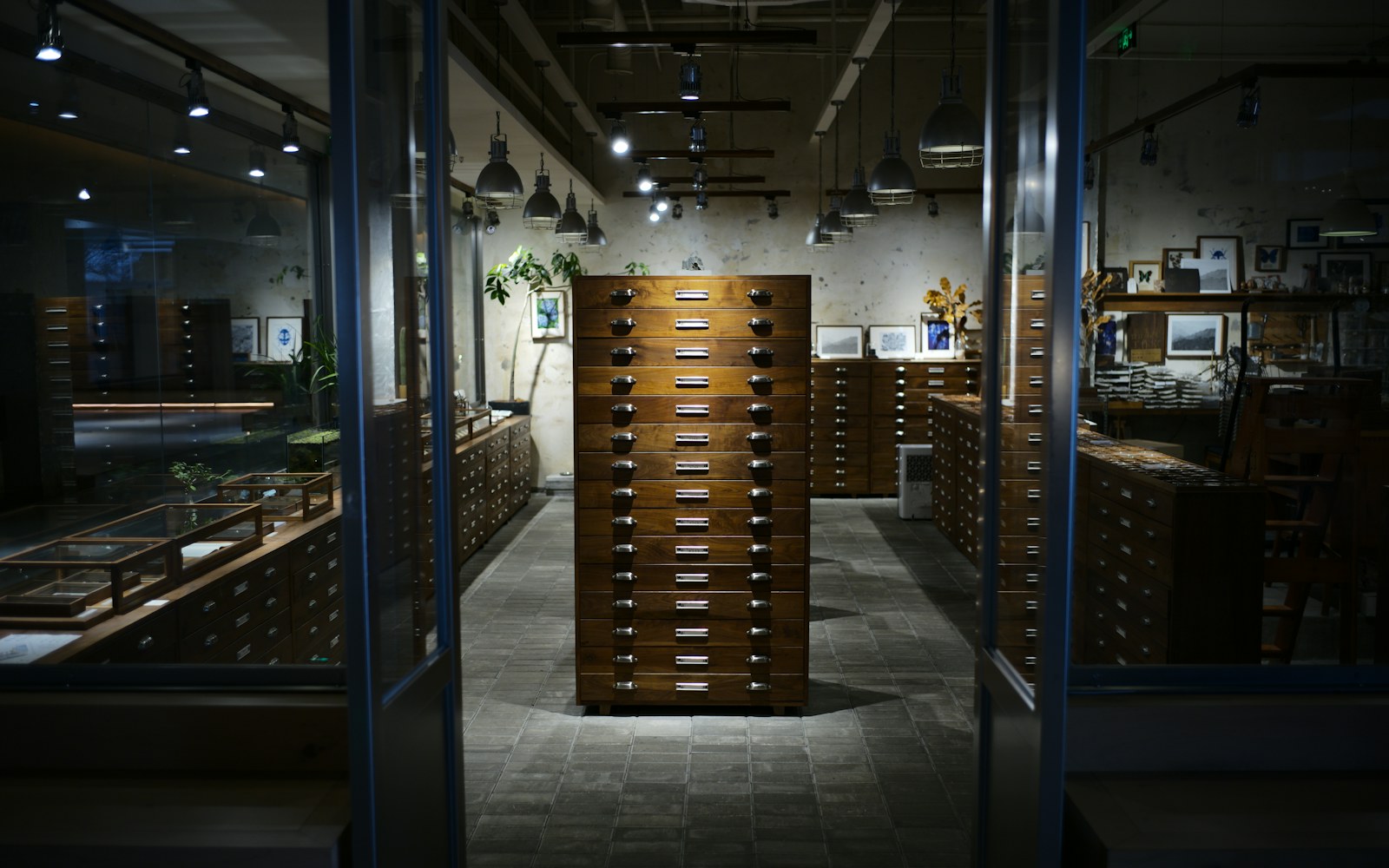
Collectors with limited room need to store or display handmade figures without stacking them, crushing costumes, fading materials, or making documentation and routine inspection difficult. The practical answer is to place every art doll according to its fragility, dimensions, and handling needs—not simply where it happens to fit.
In a small home, the goal is not maximum density. It is usable protection: clearance from pressure, direct light, dust buildup, unstable supports, and difficult retrieval. A doll in a box that cannot be opened safely is not truly accessible storage; a doll in a crowded cabinet is not fully displayed if it cannot be inspected without moving three others.
No storage format guarantees preservation. Material responses vary with construction, existing condition, artist guidance, support contact, and the surrounding environment. The checklist below helps reduce common risks while making a compact collection easier to live with.
1. Begin with a collection inventory, not a furniture purchase
Measure the collection before measuring furniture. A cabinet that looks generous online may be too shallow for a costume, too low for a headdress, or too narrow to allow safe hand access.
For each doll, record:
- Overall height, including hair, hats, horns, wings, and stands.
- Width at the broadest point, especially full skirts, outstretched limbs, or rigid accessories.
- Depth from the foremost to rearmost projecting detail.
- Weight and whether the work is top-heavy.
- Materials and construction, where known.
- Pose, articulation, stand requirements, and whether it can sit or lie safely.
- Loose, magnetic, removable, or projecting elements.
- Light sensitivity and surfaces likely to catch dust or abrade easily.
Flag works with elaborate textiles, feathers, hair, paper elements, painted surfaces, aging plastics, composition-like materials, delicate joints, or accessories that can snag. These do not all require the same solution. They do require individual assessment.
Photograph each doll from multiple angles before reorganizing. Add dated notes about existing cracks, paint wear, costume drape, stains, leaning, repairs, loose parts, and stand contact points. This creates a baseline, so a later change is easier to identify.
Then measure the room as it is actually used:
- Interior shelf depth and height, not exterior cabinet dimensions.
- Door swing and drawer travel.
- Wall clearance around mounted displays.
- The route from storage location to a clear handling surface.
- Nearby windows, radiators, vents, kitchens, bathrooms, pets, children, and cleaning traffic.
Finally, divide the collection into three working groups:
- Regular display: sturdy works that can be dusted and checked often.
- Protected display: works that benefit from reduced dust and fewer incidental touches.
- Stored or rotating pieces: light-sensitive, especially fragile, seasonal, or lower-priority display works.
2. Match the storage format to risk, access, and footprint
The best format is rarely the same for every doll. Use the following grid as a decision tool rather than a ranking of “best” storage.
| Storage format | Best use | Main risk to manage | Key clearance to measure | Typical inspection need |
|---|---|---|---|---|
| Open shelf | Sturdy dolls with secure bases and frequent viewing | Dust, knocks, light exposure, crowding | Full silhouette plus hand access | Frequent visual checks and gentle dust monitoring |
| Glazed or clear cabinet | Display pieces needing reduced dust exposure | Light, shelf crowding, door contact, false sense of full protection | Interior height, shelf depth, door swing | Regular checks for dust, leaning, and contact points |
| Wall-mounted shelf or shadow-box-style display | Lightweight, securely supported works where floor space is scarce | Installation failure, vibration, sunlight, difficult removal | Wall projection, shelf depth, safe removal path | Regular checks, especially after household vibration or rearrangement |
| Archival-quality box | Pieces needing darkness, reduced dust, or longer rest periods | Tight fit, slumping, abrasion, inaccessible stacking | Internal length, width, depth, and lid clearance | At rotation, relocation, and scheduled condition checks |
| Pull-out or under-bed storage | Low-profile works in smooth, fully clearing drawers or containers | Scraping, shifting, stacked contents, dust ingress | Drawer height throughout its travel and clearance at opening | Each time the drawer is opened, plus routine checks |
Open shelves
Open shelving uses vertical space efficiently and makes routine observation easy. Reserve it for dolls that stand securely, can tolerate careful dusting, and are not placed in direct sunlight or heavy household traffic.
Leave room around costumes and limbs. A shelf is too full if a hand cannot lift one doll out without brushing another figure, a shelf edge, or a decorative element. Avoid arranging dolls in a way that makes the front row a barrier to the back row.
Enclosed or glazed cabinets
A glazed or clear cabinet can reduce dust exposure while keeping the collection visible. It is useful for textile-heavy works, finely painted surfaces, and pieces that are easily disturbed by frequent handling.
A clear case is not complete protection from dust, light, pollutants, or handling risk. Check whether the cabinet sits near a bright window, whether the doors can open without catching nearby objects, and whether shelf supports are suitable for the load. Give every doll enough depth that its costume and stand are not pressed against the back panel or door.
Wall-mounted solutions
Wall-mounted shelves and shadow-box-style displays can free valuable floor and tabletop space. Use them only for dolls that are lightweight enough for the structure, securely supported, and easy to remove without twisting or snagging.
Avoid walls exposed to direct sun, frequent vibration, slamming doors, or accidental knocks. Secure installation, appropriate load capacity, and sufficient clearance matter more than visual neatness. Do not mount a doll so high that safe inspection requires awkward reaching.
Archival-quality boxes
For suitable works, archival-quality, acid-free, lignin-free boxes may be preferable to ordinary household cartons. They can reduce dust and light exposure during storage, particularly for dolls that are resting between display periods.
Box quality is only part of the decision. The box must be large enough to avoid forcing a tight pose or compressing costume volume. The doll should not roll, slump, or rub against hard sides when the box is moved. Use clean, suitable supports and dividers only after checking that they do not stain, abrade, transfer residue, or create pressure at vulnerable areas. Do not assume any foam, fabric, plastic, or padding is universally appropriate for every construction.
Pull-out and under-bed storage
Pull-out storage can be efficient, but it is often risky for tall, fragile, or highly decorated dolls. Use it only if the drawer or container fully clears the doll’s height and decoration throughout opening and closing.
Test the travel slowly with an empty mock-up or carefully measured clearance first. A container that scrapes a headpiece at the final inch of closure is not a workable solution. Never stack dolls or boxes of dolls inside a pull-out system simply because the footprint is hidden.
3. Prevent the three small-space failures: dust, pressure, and light
Dust: reduce exposure, then keep checking
Dust can settle into textiles, hair, surface texture, and crevices. Enclosed display and clean boxes can reduce exposure, but they do not remove the need for inspection. Check for dust buildup before it becomes embedded or prompts hurried cleaning.
Keep display areas away from food preparation, smoking, aerosols, scented products, and routine cleaning sprays. If dusting is needed, work slowly and avoid techniques that pull at hair, feathers, loose paint, or applied details. When a surface seems unstable, seek object-specific advice rather than treating it like a durable household ornament.
Pressure: a doll should never support another doll’s risk
Do not stack dolls, stack boxed dolls, or rest heavy accessories on costumes, limbs, faces, wings, or projecting details. Pressure can gradually distort soft textiles, strain joints, crease paper, or create abrasion where two surfaces touch.
A support should stabilize rather than squeeze. Check waist grips, clips, saddle stands, wire supports, and custom mounts for pinching, staining, rubbing, or changes to the doll’s pose. A stand that appears secure when untouched may still concentrate pressure over time.
For boxed works, prevent movement without tightly wrapping or compressing the object. The aim is a stable resting position, not a packed parcel. Recheck support placement when the doll is rotated, moved, or returned from display.
Light: visible does not mean risk-free
Keep dolls out of direct sunlight. Strong or prolonged light can contribute to fading and other visible changes in sensitive colors, textiles, paper, and some plastics. The extent of risk depends on the individual work and its materials.
If a room is bright, favor shorter display periods for sensitive pieces, use the more protected areas of the room, and rotate the display. A cabinet near a window may still require active light management; glass or clear panels should not be treated as complete light protection.
Where possible, use a more stable lived-in area of the home rather than an attic, basement, garage, or other space prone to pronounced temperature or humidity swings.
4. Build a compact layout that remains safe to use
Set a simple clearance rule: every doll needs space for its complete silhouette, costume volume, and safe hand access. “Fits upright” is not enough.
Use these placement checks:
- Put heavier and more stable works on lower shelves when appropriate, while keeping them away from pets, children, mop water, vacuum traffic, and splash risks.
- Give tall, articulated, or top-heavy dolls a stable base and a shelf deep enough to support it fully.
- Keep projecting elements away from cabinet doors, shelf lips, adjacent bodies, and overhead shelves.
- Avoid visual arrangements so crowded that one doll must be moved to inspect another.
- Do not place fragile dolls at the back of deep shelves where retrieval requires reaching over other works.
Create a small handling zone near the display. It can be a clear tabletop, a dedicated shelf, or another clean, uncluttered surface large enough to set down one doll and its loose accessories safely. This prevents the common small-space problem of holding a doll while searching for somewhere to put it.
Keep drinks, food, cosmetics, aerosols, and cleaning supplies away from this zone. Before moving a doll, clear the route, open doors or drawers fully, and prepare any support or box before lifting the object.
5. Use rotation and records to make a small collection work harder
Rotation is not simply a way to show more dolls. It is a way to limit the duration that especially light-sensitive or fragile works spend in exposed display positions.
Make the plan deliberate:
- Identify pieces suitable for regular display and those better suited to shorter display periods.
- Rotate one cabinet tier, shelf, or wall display at a time.
- Avoid frequent, unnecessary handling just to refresh the arrangement.
- Inspect each doll before it returns to storage and again when it comes out.
Assign every location a code: for example, C1-S2 for cabinet one, shelf two, or B4 for box four. Record the current location in the inventory. A location code should allow you—or another household member—to find the doll, its stand, and its documents in seconds.
Maintain dated condition records with photographs. Include:
- Costume drape and folds.
- Stand or mount contact points.
- Leaning, slumping, or joint changes.
- Loose elements and accessories.
- Discoloration, odor, insect activity, dust accumulation, or surface changes.
- Previous repairs and known vulnerabilities.
Store original packing materials, custom supports, labels, provenance, care instructions, and artist documentation separately if needed, but cross-reference everything to the doll’s inventory number. Original packing may be valuable as a fitted transport solution, but inspect it before reuse and do not assume its materials remain suitable indefinitely.
6. Common compact-storage mistakes
Buying furniture before measuring the dolls. Exterior dimensions and styled product images do not reveal usable interior clearance.
Filling every shelf to the edge. Dense display eliminates safe hand access and turns inspection into a handling event.
Treating a clear cabinet as complete protection. It may reduce dust exposure but still requires attention to light, fit, shelf load, and periodic checks.
Using a stand that compresses the costume. Stability should not come at the cost of a pinched waist, bent limb, or permanently altered drape.
Hiding stored dolls beneath other stored dolls. If reaching one box requires shifting a stack, the system encourages rushed handling and missed inspections.
Making records after the move. Documentation is most useful when it captures condition before rearrangement, storage, or transport.
Before you buy or reorganize: a final audit
Use this checklist for every proposed shelf, cabinet, box, or drawer.
- Does the space fit the doll’s full height, width, depth, costume volume, stand, and projecting details with clearance on every side?
- Can the doll be removed without brushing adjacent objects, door frames, shelf edges, or overhead furniture?
- Is there enough room for safe hand access and a stable grip?
- Is the shelf, wall mount, drawer, or cabinet suitable for the expected load and securely installed?
- Does the chosen support hold the pose without squeezing the body, staining fabric, abrading paint, or straining limbs?
- Is the location away from direct sunlight and substantial environmental swings where a more stable alternative is available?
- Does the solution reduce dust exposure without making routine inspection impractical?
- If boxed, can the doll rest without rolling, slumping, rubbing, or being tightly compressed?
- Are dolls and boxes kept unstacked, with no heavy object bearing on fragile components?
- Is there a clean handling zone nearby?
- Does the inventory record the current location, condition photographs, support needs, and loose components?
- Could another careful person understand how to locate and move the doll safely from the record?
A small apartment doll display succeeds when it remains calm to use. Leave space to see the work, space to hold it safely, and space in the record to track what changes. That approach will usually protect a collection better than any attempt to make every available inch carry another doll.